
When you’re a parent with an instinct that something isn’t quite right, figuring out the next steps can be challenging. Researching is often overwhelming, with internet doctors providing contradicting information or symptoms so broad they could apply to anyone. That is why ACP is here to help with our incredible team of Psychologists who provide Diagnostic Evaluations to families in our communities. These evaluations are meant to give a full picture of where learners are developmentally, and assist in gaining access to treatment if it is recommended. However, what exactly do they entail and how do they work? We sat down with our Licensed Clinical Neuropsychologist, Dr. Marlana Borgos, to learn more about this process and why it is so important. We know you will find her information as insightful as we did!
What is it that you do within your role at ACP?
I actually have a split position mostly because I started with the Warwick clinic, and we were a general clinic. I think that the Tollgate Road clinic is kind of a unicorn, within the world of Autism Care Partners. It’s unique in that we do general referrals, not just Autism. So, we tend to get people who want that evaluation anyway. But a lot of times they end up having other disorders and not just Autism or not Autism at all. We see young children and young adults up to age 30, so it’s a different experience there.
The other part of my time is actually spent in Framingham at an actual ABA clinic. That’s all young kids under age five or six, and I’m evaluating and screening just for Autism there. So, two different parts, and I love that actually. I get bored easily. I love having two different parts to my job, and I really appreciate having that. And Autism Care Partners has allowed me to do that.
Can you describe some of the diagnostic process?
Autism Care Partners uses what’s called an ADOS. It’s an acronym for Autism Diagnostic Observation Schedule. It’s an assessment tool. We’re relying on a lot of information, our observations of these little kids, and what the parents tell us. We have a formal intake first where we ask them a lot of questions about the child’s early development, such as did they have delayed speech? Were they in Early Intervention? Were they responsive to you as a baby, or did you, in retrospect, think they were deaf? A lot of parents are concerned that their young babies who end up having Autism were actually deaf because they’re not responsive to the mom’s voice. Or the opposite, they cry and get upset with all that noise. We get a good developmental history.
Then we also have questionnaires we give to parents. If a child is in preschool or early intervention, we’ll give questionnaires to them, as well. We’re trying to see how the child is across different settings. I want to be thorough, and I want to be fair to the parents and make sure that I did a thorough job, that I know that however the child is behaving today is how they always behave. I always ask, “Is this typical of how the child is?” It’s a comprehensive evaluation to collect all that information.
In Rhode Island, because it’s an assessment clinic not just for Autism, we also have graduate students, interns and postdocs who do cognitive testing. Usually, the cognitive testing doesn’t happen for a child unless they’re about age four or five or older. We do it for school-age children and for young adults. That focuses on things like attention, learning and memory, general IQ or intellectual functioning or cognitive functioning. So, their verbal and non-verbal skills and then mood and personality. We’re looking at all this different information through actual tests that are administered that the graduate students do, and then the questionnaires that are sent out to schools, parents, caretakers, etc. Depending on the age of the person or if they’re a school age kid or an adult, they might fill out questionnaires themselves.
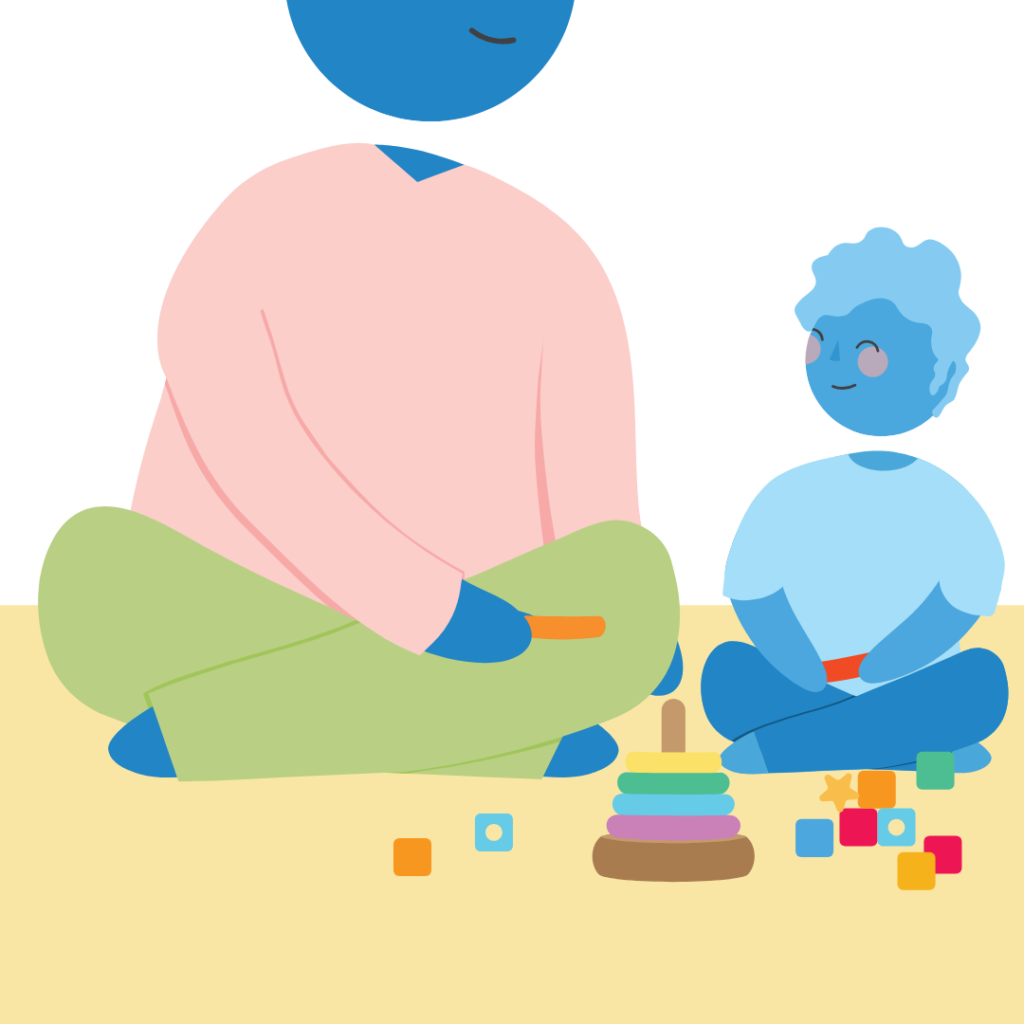
As a Psychologist, I’m supervising the graduate students, who are doing the cognitive testing, and then it’s the Psychologists who are doing the ADOS testing. If they are concerned about Autism or if I’m concerned about Autism from the intake, then we do a separate appointment for the ADOS. In terms of the ADOS, it depends on the age of the patient. For these little kiddos, I’m on the floor a lot in the rooms. I’m playing with them. There’s a lot of toys that are involved with the ADOS, and I’m trying to see if they respond, if they’re interested in what I’m doing, and if they’re engaged. If they’re showing social affect, so eye contact and facial expressions. What is their communication like? Are they showing nonverbal communication like gestures or looking at their parents for comfort or what’s happening there?
Then also verbal communication. Not all of them are verbal, it depends on the age of the child. I would say most of them have some sound, some vocalization, but not necessarily words. So, we’re assessing all of that. We’re also assessing what’s called social reciprocal communication — how are they responding to me? Are they in their own little world and could care less about me, or are they engaging with me to play with the fun toys and items that I bring out?
What other characteristics are you observing?
So, with little kids at either location, I’m doing the ADOS, which is on the floor with them and showing them toys. It might be push up toys, or winding toys, or I’ll blow bubbles. I’ll have a doll available. Then also pretend play items. So, there’ll be a plate and dishes and a cup, or there’ll be bath items or Play-doh for a birthday party. So, it’s both functional, pretend and what we call imitative play, as well. I’ll take a little rubber frog and bounce him around and make a little sound for him, and I want to see if the child will imitate me. Then it goes to imitating something that’s not as obvious. It’s called a placeholder, so it’s just a block, and I’m using it as an actual thing. Now I’m using that as the frog. We’re really testing limits, I would say, through these toys with the little kids. Sometimes, they’re in their own world and they just do a repetitive behavior or they’re just sitting there.

If a kid is screaming and sitting in the mom’s lap, I’m going to have Mom come on the floor with us. If the child will absolutely not do anything with me, then I will have the mom do it and tell her what to do. That actually happens in remote testing that we’ve been doing recently. I definitely prefer in-person testing. You lose so much remotely, but sometimes either because the parents can’t get to Framingham or live further away … If I don’t feel confident about the diagnosis based on the remote testing, I’ll schedule for them to come in another time. That happens sometimes. Other times I feel it’s very obvious because the child has come to me from so many referrals. Everyone is very confident and they just kind of want my final word. In those instances, it is easier because the child clearly has Autism, and he or she shows those behaviors even through remote testing.
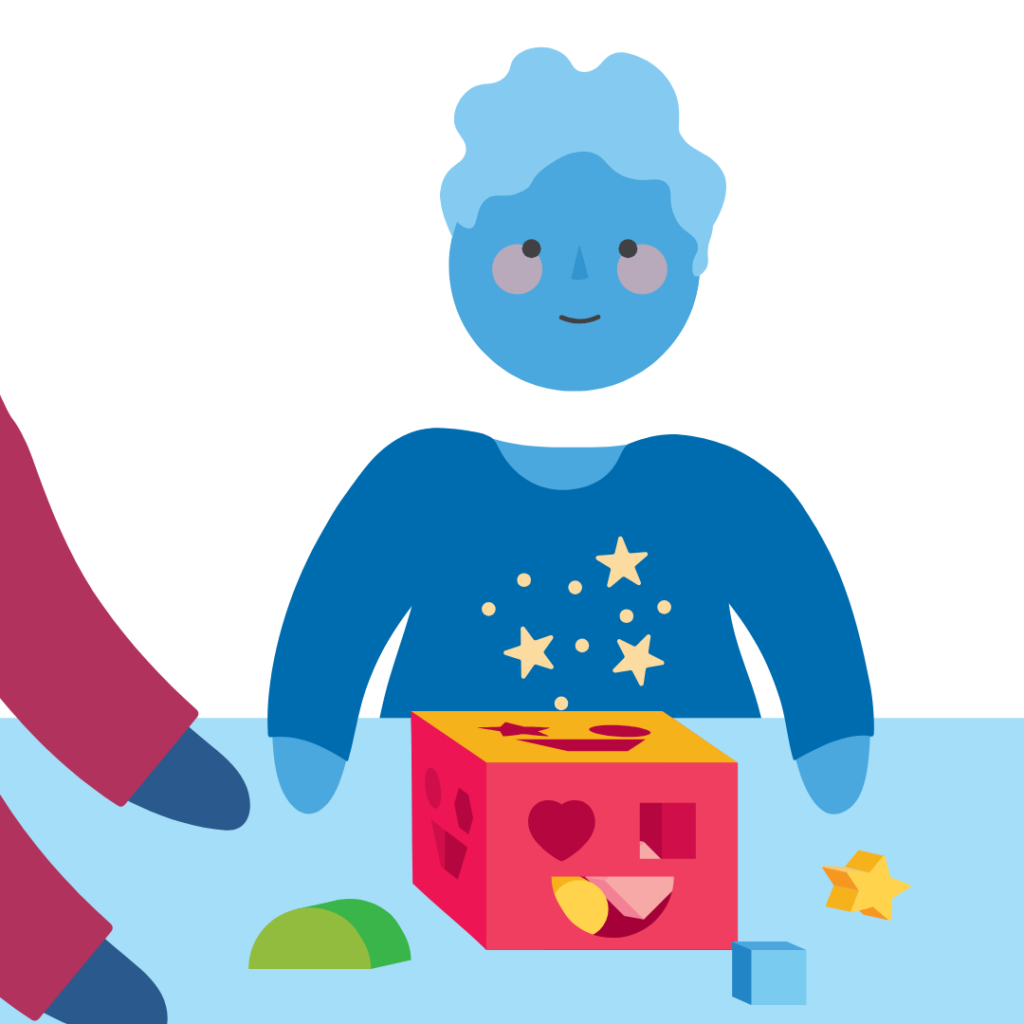
Once a child can talk, even if it’s not complete, but some speech, so maybe phrases or short sentences, then they’re sitting at a table with me, and that’s how the ADOS is done. It’s all stuff we do on the table. There are still some more play-oriented items, but some of it is just asking them questions like, do you have friends? How do you define a friendship? How is this person a friend? You’re trying to get into their understanding and their insight about other people and taking someone else’s perspective.
Then we’re going back to the basic skills as well, like social affect. Do they show eye contact? Do they show facial expressions? Do they show verbal and nonverbal communication with gestures? We show them a storybook that has few words and mostly pictures, even with the adults. That will elicit facial expressions and descriptive words such as “he’s scared” or “she looks happy.” If someone has Autism, usually that doesn’t happen. So, we’re really trying to elicit things through these items of the ADOS. There’s a score given at the end, and it’s not the end-all. It’s an assessment tool. People can score high, which means that it’s more likely Autism for a variety of reasons, but that’s not always the case. It might be that they’re very anxious and shy—social anxiety—they just aren’t talking very much, and they’ll give a one word response. It’s our job as Psychologists to use our clinical skills and understand what’s happening. Is this score high because they have Autism or for other reasons? That’s why we rely on the questionnaires from other people who know them and observation and the developmental history to sort all that out to make sure that we’re getting it right.
What things would indicate Autism?
I spend a lot of time, especially in Rhode Island, talking to people and educating them about the distinguishing symptoms of Autism versus other neurodevelopmental and psychological disorders, such as social anxiety, OCD, or ADHD. Some of these symptoms overlap, and I think it’s more confusing for the public when they go online and see checklists and the checklists aren’t specific. It’ll say something like repetitive behaviors, so someone with ADHD might interpret that as they’re fidgeting or moving around. It might be someone who has OCD, Obsessive Compulsive Disorder, where they’re tapping and touching things all the time. Then you get to Autism, which we know has unique symptoms. It might be a child who hand flaps or who spins around all the time, who is more interested in playing with the wheels of the airplane instead of actually using the plane as a toy.
In Rhode Island, unless they’re a young child, I spend the majority of my time not diagnosing Autism. I’m happy to explain to someone what the difference is and why I think they have something else other than Autism, which is usually the case with a lot of older teenagers and young adults. I have had a few adults with Autism, but usually they were diagnosed as a child and then they’re coming back because they’re struggling and they need documentation for work or school. I’m not going to just assume that that diagnosis was accurate. I like to do my own evaluation, but I’ll say that it usually turns out that yes, indeed, they do have Autism.
But a majority of older people who come to us in Rhode Island really, truly believe [they have Autism], and it’s heartbreaking. I always say to them, unfortunately, there’s no magic pill. If there was, then I would give it to you. But first, you don’t have Autism. And second, there’s no magic pill for it. I explain about the recommended ABA intervention and how that behavioral treatment works for children with Autism. I also explain that usually these symptoms are prevalent early on. It’s not that all of a sudden at age 20, someone has Autism because they don’t socialize with people. We spend a lot of time doing differential diagnosis, and I love that part of the job, actually. I enjoy being able to differentiate and figure out what’s going on. And then the communication part is so important so people can feel validated despite whatever diagnosis they may be given or not.
What sort of things do you see that indicate to you that the referrals you had gotten were correct or their previous diagnosis was?
The more obvious cases are easier to diagnose. If a child is sitting doing lots of repetitive Autism-like features like spinning, hand flapping, getting upset easily with transitions, in their own little world, not really participating in the ADOS, obviously that’s a clear picture. Also, the eye contact is poor. They’re not using it or integrating it when they make social overtures, so when they’re trying to get their parent’s attention or my attention. They’re just coming up to us and not really making that effort or able to communicate or show communication.
A lot of times they totally disregard me. I don’t even need to be there, they’re happy to just play with one toy the whole time. Those are the obvious cases. And then I also take into account the questionnaires. Is this child like this everywhere else? It’s helpful if the child is in a group such as at daycare or preschool, because a lot of parents have their children at home, and so I can still diagnose, but it’s helpful to see how they are really in groups, too.
I have to remember developmentally what’s appropriate. My job as a Psychologist is to understand that at age 2, children don’t usually interact and play, it’s more parallel play. I would say the positive signs are more obvious, which means that I can see them. The other signs are based on what the parents are telling me and for developmental delay. Maybe they had speech for a little bit at age one. They had words, and then it progressed a little bit and then it just stopped. They either regressed or didn’t go forward. That’s a concerning sign for early development.
At this point, I feel that I am very experienced. But when it’s a closer case, then it’s a little harder. So that’s when a young child doesn’t do much at all, or they don’t move or don’t talk. They’re just quiet and they’re on their parent’s lap. If they’re really young, I’ll say come back in six to nine months. I’ve done that a few times. It’s not a regular thing to do, but if I’m really unclear, I try to be conservative about diagnosing. I don’t want to over-diagnose. I want to make sure I get it right. And if a child clearly has Autism, then I feel urgency to diagnose quickly, so they can get ABA treatment. It’s a fine line there with some of these unclear cases. I have had people come back in 6 to 9 months, and I’m so glad they did because then it’s clearer.
If it’s very unclear, we’ll often diagnose Neurocognitive Disorder NOS, which is a general diagnosis. It’s for when we suspect something is going on, their development is atypical, but it’s not clear yet that it’s Autism. Then we’ll have them come back in 6 to 9 months. Especially at that point, they usually are in a group such as daycare or early intervention group or something. Then often more behaviors come out to make a more confident diagnosis.
What happens if a child does then show symptoms of Autism?
I try to be honest and realistic, but also optimistic because if they’re young then they have a better chance of gaining skills and evolving through ABA and other appropriate interventions, at least this is what research shows. Speech Therapy or Occupational Therapy and obviously ABA. I try to communicate that to parents, “I know this is hard to hear. I’m a parent too…” I try to be empathic with them and say, “It’s hard to hear anything about our children.” But I explain to them that the good thing is that they’re young and so ABA treatment is their best bet and that’s hopefully where they’ll gain some more skills.
But I’m realistic with them that this is a developmental disorder, and there’s no treatment that makes it go away. It’s not going to completely disappear. I always tell them I don’t have a crystal ball when they ask about the future. Unfortunately, I can’t tell them exactly what their child is going to be like, but the best outcome and to give them the best foundation is to do ABA. Those are the rewarding days because I feel like I’m doing some good for someone and they’re so thankful.

Parents are usually thankful. They’ll cry. I always have tissues around, and I talk to them and I say, “This is a part of who your child is. This is the reason for the labeling, and the diagnosis is not to define who your child is. It’s just to get help. It’s for insurance companies. It’s for other professionals to understand what kind of difficulties they have and how we can help.” I also tell them to talk to the ABA clinicians once they get settled, that they’ll probably have a lot of good information to share in terms of what is successful with their child at ABA.
If it’s comorbid diagnosis, so more than one, a lot of these kiddos with Autism, especially if they’re school age already, around age 4, 5, 6, often have ADHD too. So, I explain that research still doesn’t understand completely what’s going on, but because my background is in neuropsychology, I go to conferences, and the last one was about the genetics of Autism. I learned a lot from that, and I explain to people, I’m not a medical doctor, but this is what they’ve learned so far. I say, “I know this is what they’re researching right now, but there’s still a lot of unknowns.” Those conversations are always interesting, educational, and I try to be supportive, but realistic with parents.
What do you think that caregivers would need to know about the future if their child does receive that Autism diagnosis?
I think psychoeducation is important. I think there is a lot of misinformation out there. They need accurate, valid information. Parents are very concerned about the level of Autism that their child has. I do spend a lot of time talking about that. We used not to give levels but now we do because insurance companies also want that. I think they want to know the distinguishing features of Autism. Why does my child not have Autism? And then why do they have Autism? I emphasize understanding that these levels are a picture in time and they’re still very broad. Someone in level 2 means they don’t have minor symptoms so that they can just go into preschool witout supports, and they’re not so severe that they’ll never learn to speak or be in a wheelchair the rest of their lives and be incontinent. It’s still a wide range.
I think to understand that and to understand what is helpful, what research has shown so far, that ABA is for the best outcome. Some of the parents prioritize school. They don’t understand that, and I always push this to them: school will always be there for their child. Learning how to read and write will always be there for them. Give them a foundation first in what they need, which is more social development and communication skills.
Then I also have recommendations for the older children for home ABA. I have a list that I give them. They want to know what the future holds. That’s what mostly they’re interested in knowing. I think being honest and accurate with that in terms of research and our clinical knowledge is best.
What does the distinction between Autism awareness and Autism acceptance mean to you?
I think this is true with any disorder, that the disorder and the information evolves over time. I would say that to me, Autism awareness is what’s happened in the past. We all became aware of it and we got some information, some education about what it looks like. But I feel in some ways it was stereotypical information. I think awareness is just being aware that it exists and having some information about it.
Whereas acceptance, I feel is what we do now. We’re trying to ready these children, to accept them fully for who they are. We’re thinking about the diagnostic findings as strengths and weaknesses. Where do they need help? Where are they strong? How can we help them? It’s more inclusive, including them in society and everything we do.
Schools I think are showing that, too. Some schools, I am always thrilled when I hear this, actually have ABA in their schools. I question what does that ABA look like and how often it is done, but the point is we’re moving more toward inclusivity and understanding that people are part of our communities just like any individual differences. It’s a good thing.
These treatments are proven to be most impactful when learners are younger, so if you are questioning an Autism diagnosis for your child, there’s no need to wait! While the national wait time for a Diagnostic Assessment is 6-12 months. ACP can see your little one between 3 weeks to 3 months, allowing for quicker access to services if needed!
Learn more about our Diagnostic Evaluations on their services page here or contact ACP with any questions!