
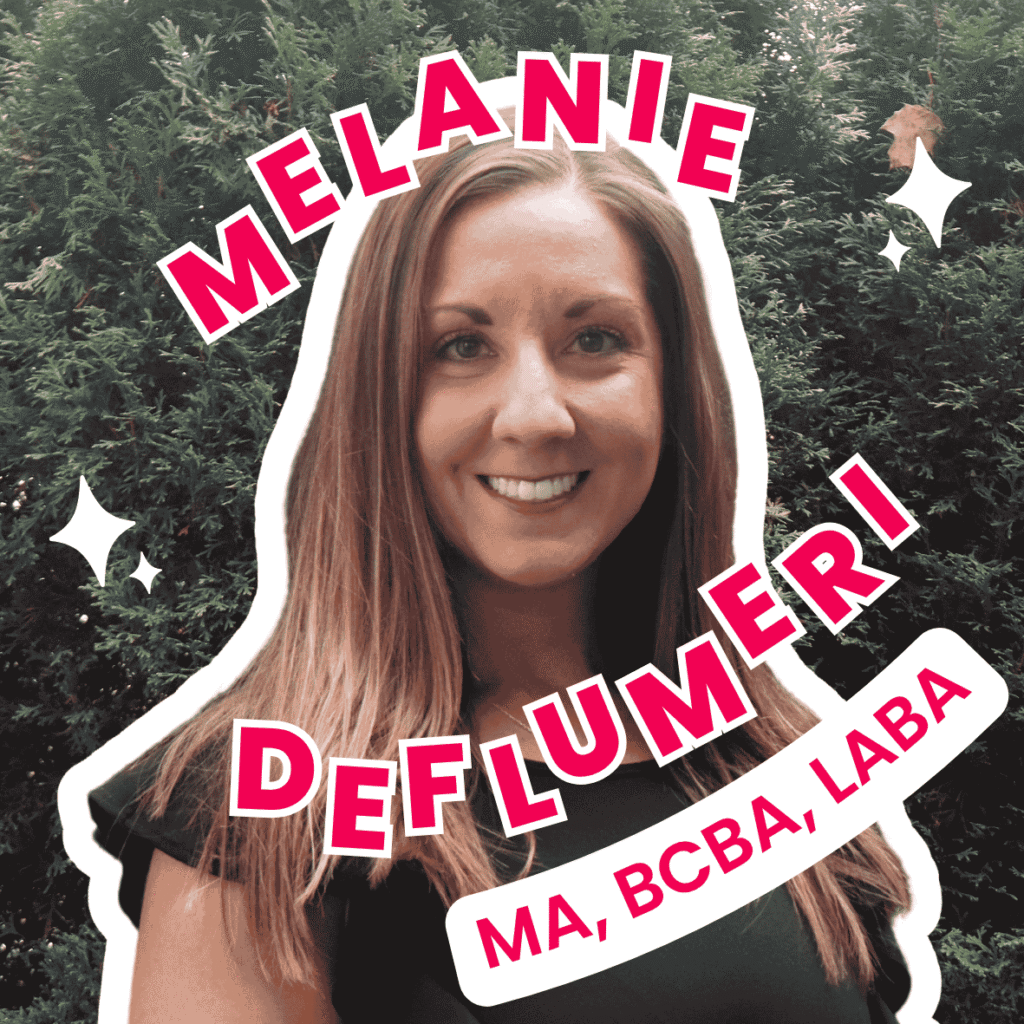
Meet Melanie DeFlumeri, MA, BCBA, LABA. Melanie is incredibly passionate about ABA Therapy and the life-changing impact it came make, especially for the littlest learners. Melanie has been a BCBA since 2011 and through her education and experience, it has become very clear: the sooner children with Autism receive therapy, such as ABA, the more likely they are to make large strides in development. ABA Therapy is also considered the gold-standard of Autism therapy, resulting in the strongest, positive outcomes.
This conversation happened during Autism Acceptance Month, giving us a great opportunity to discuss ABA Therapy alongside the importance of advocating for the acceptance of differences, not just the understanding that differences exist. Read more to hear about the magic ACP has to offer!
What does Autism acceptance mean to you?
I would say first acknowledging. And then embedding. A big part of that growth is that there’s a lot of misinformation or lack of information about what Autism is and those symptoms and how we can best help learners who present those. So, acknoledging, right? That’s powerful that you have that information. It means you understand it more and then you can make room for it. And everyone has a lot of different opinions about what that can mean. I think at the crux of that, it is embedding and assimilating with what works for that learner. So, meeting them where they’re at, acknowledging where they are, trying to put supports in place that are easiest for them so that they are a part of that group in whatever way that best looks like for them.
Care should be individualized. And I think our mission statement shakes hands with that. You should always meet someone where they are, wherever that is. And now you can help support them best and you can really polish their strengths and improve areas of need.
The common denominator for that acceptance piece is meeting someone where they are, then helping them be their best self in there.
What do we currently do to spread Autism acceptance as a society and what do you think that we we still need to do among the larger group?
Information is really helpful on the big picture down to the small picture. We have a whole month now dedicated to autism acceptance. That to me is growth in itself. I think as a society we need clearer information.
I can’t stress that part enough, especially just being a clinician at heart. Be careful what you read online. Make sure that things are validated or empirically researched.
When there’s misinformation, that can create some cloudiness that might delay access or prevent access to the appropriate care. The more you know … I think as a society we are still lacking information. I hope that we continue to spread more research. More word of mouth. I think that would really help, especially in a smaller state. It doesn’t surprise me anymore when I meet someone who hasn’t heard of the services that we provide, or ABA in general, and we just need to get that word out there more. So over time I anticipate that will get better.
What does the future hold for a child that has access to care?
Having the opportunity to engage and receive that care is life-changing for someone, and that’s why early detection, early diagnosis, is so critical because time is precious.
You can’t always make up for lost time.
That means information has to be readily available and out there as soon as possible, and then one can make the best informed decision possible. That’s why I feel strongly that information is just so important to get as soon as one can.
How do those early interventions make a difference?
There’s a lot of research supporting that.
There have been multiple studies, repeated studies, showing that comprehensive care at the at the earlier age possible does produce best gains. And our gold standard of care is always going to be the best, significant gains one can achieve.
With that, the earlier the better. But again, we’ll always meet a patient where they’re at and then go from there.
What is something that you could talk about for hours?
ABA. Truly, though. Seeing the field change over the past fifteen plus years. If I could stand on a sidewalk with a sign about it, I would. [Smiles]
We have this magic to offer that is shown to be so, so impactful in the best way.
And the more people that know about that greatness, the more can take advantage of it.
Information is powerful. The more you know, the better decisions you can make. I know I’m heavily on the clinical side, but I do feel so strongly about that. All the families I’ve met over the years who have said, “I wish I knew about this sooner. I never even knew this existed.” You know, it’s really shining a light on those gaps in information. We know it best in this field. I think it is on us to be ambassadors for ABA.
As Melanie shares, research is clear that the sooner a child with Autism receives care—especially the gold-standard ABA Therapy—the larger, positive impact it will make on their overall ability to live an independent, comfortable life. ABA is like a magic we have to offer, especially for children during such a crucial developmental window. When we are able to provide this therapeutic care in an Autism-affirming way, everything just comes together~
If you’re ready to start your ABA journey, connect with us today at 800-679-3609 or complete this form to inquire about services available near you! We also offer Diagnostic Assessment in a shorter timeframe than the national average, providing families with answers more quickly so they can start therapy sooner, if it would benefit their child. The sooner a child can receive a therapy they need the better, before they learn maladaptive behaviors that are harder to adjust once they’ve become habit.
Let us help your family by answering all the questions you might have by connecting with us today!