
ABA Therapists promote independence in big and small ways. Every session, goal, and tool is uniquely tailored to the individual client the therapist is working with in that moment. At ACP, our therapists have to be extremely flexible, as the attention and interests of a child can change easily as any caregiver knows. We want the children in our care to be engaged, motivated, and interested in their therapy, so they can have the strongest outcomes.
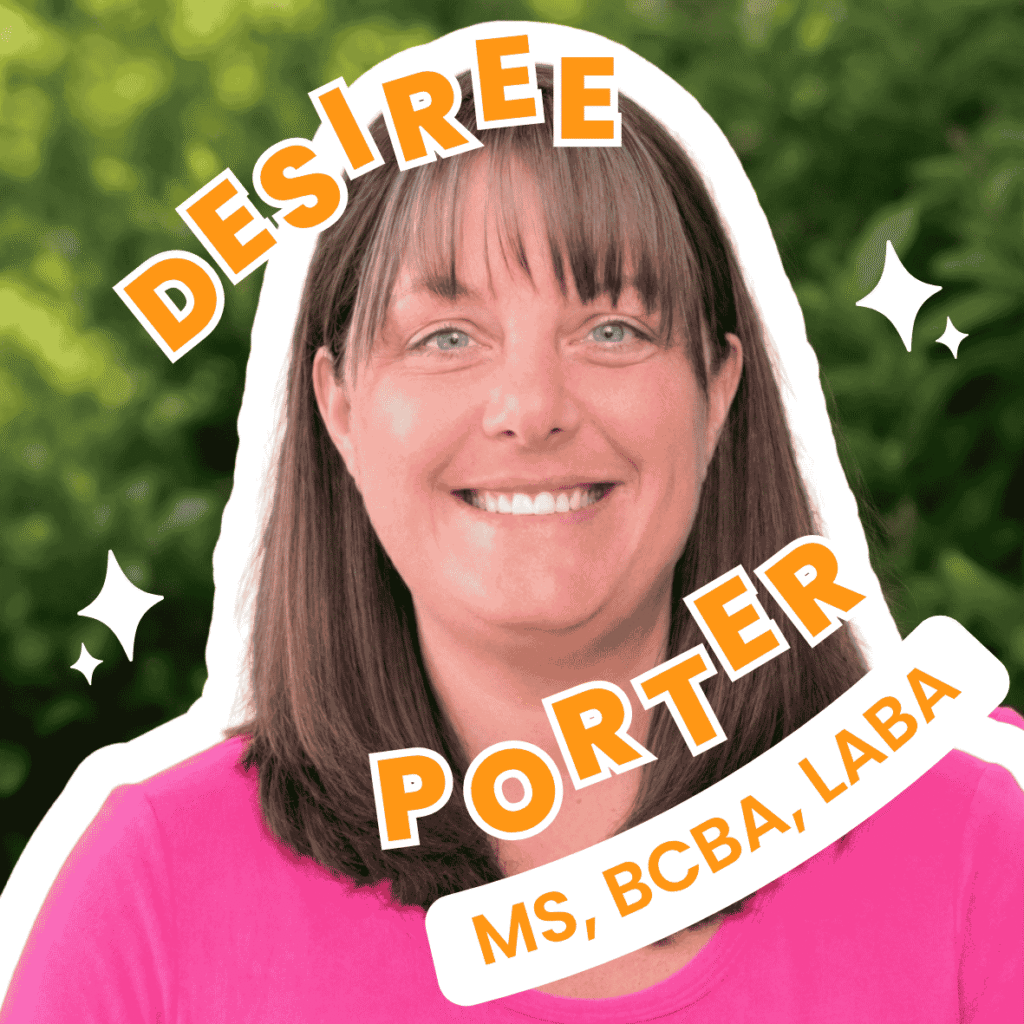
To finish our back-to-school series, we met with Desiree Porter, MS, BCBA, LABA to discuss how ABA Therapy works, how ABA might prepare a child for preschool or kindergarten, and what caregivers can do to help their child get ready for the academic setting—if that is something they are wanting for their child. We hope you find this article as insightful as we did!
Tell us about yourself.
I have been in the field of ABA for eight years now, and I’ve been a BCBA for about 5. I enjoy helping children and supporting the team that I work with. Outside of work, you will find me spending time with my husband and our four children. We have three boys and one daughter.
Can you tell me what you do within your role here at ACP?
I’m the Clinical Director of our Auburn Center, which actually just opened one year ago. I manage the day-to-day aspects of the center, including mentoring the staff, building systems that help our center run efficiently, and supporting clients and their families.
I have a small caseload that I love working with and supporting. A few of them are going off to kindergarten, so getting to have this conversation around school seems kind of fitting.
You work particularly with very young children. How does that influence your work compared to other settings?
I’ve worked with children of all ages. However, working with the younger population, it really shaped how I view ABA. At this stage, every interaction is an opportunity to learn. We don’t just focus on minimizing those challenging behaviors but building the foundational skills that are essential to their independence.
Things like communication, play, social skills, they’re all vital in helping children navigate the world around them.
It’s about progress, not perfection. Even small outcomes sometimes produce the greatest impact. And so, I just really enjoy it, and I love what we do here.
What’s your ultimate goal when you’re working with a client?
My goal is to help these clients become independent and as successful as possible in their everyday lives.
Every child is different and the approaches used need to fit their needs.
I want there to be meaningful results, not just meeting goals on a plan. Yes, the data is important to help measure progress, but what matters is whether these goals improve their everyday lives.
Does your work influence a child’s readiness for preschool or kindergarten? If so, how?
Yes, it sure is. One of the biggest things to note is that we’re helping children learn the fundamental skills needed for independence in a school setting. Every journey is different.
We work on skills, including following a structured schedule, communication, engaging with peers, participating with the group, transitioning, and building independence with daily routines like hand washing, toileting, mealtime routines ….
It’s not just about the academic. It’s about giving the children the tools to learn, connect, adapt, and participate with other children. We create these natural opportunities for kids to learn.
Can you give us some examples of things that you might address within your practice and maybe some examples of how you accomplish those goals?
Every child has different needs. So we tailor those needs to the individual.
We identify skills that are meaningful to their everyday life, like communication. If a client is having difficulty like requesting their wants and needs, we could work on teaching them to ask for help, requesting a favorite item or a location.
Usually, we follow a structured schedule. Within that schedule, we might use some type of supports in accomplishing those goals. We can identify some reinforcers that are helpful to them. Like maybe they want to carry around their favorite toy to help with the transition, and we want to make things easier for them. We’re not here to make things more difficult.
We want the goals to be carried over outside of ABA to the home, the school, the community, and just become part of the everyday life, so the child doesn’t have to work so hard.
Could you tell us how we use a preferred item in therapy?
We might use some sort of first-then tool, like first bathroom, then we can have our teddy bear, or sometimes they just want to carry it. We might help by carrying the item for them to help get them to where they need to be. And then, they go to the bathroom! They get high social praise for going to the bathroom. Then they get their preferred teddy bear for as long as they want. So they learn, Okay, I know if I go to the bathroom, I get time to play with my teddy bear. So we find reinforcers that work for them.
Motivation and reinforcers are not the same thing. The child might be motivated by something, but only serves as reinforcement if it increases the likelihood that they’re going to engage in the behavior we need them to engage in.
At first it might serve as motivation, but over time it will start to serve as a reinforcer. I know what I have to do to get my favorite things.
How can a caregiver of a child with Autism help prepare their child for preschool within the home setting?
Parents and caregivers play the biggest role in preparing a child for preschool or kindergarten. There are so many important skills that can be practiced naturally at home.
Simple activities like playing a game or reading a book can help a child in school, maybe attending or communication. Maybe they’re reading a book and they’re labeling different things in the book and they’re learning common objects.
Attending is like maintaining focus on the appropriate thing, which requires several skills to do. Maybe it’s just sitting in a chair and following directions from a teacher or another familiar adult. Reading a book or just sitting and being able to listen to it and pick out pieces … Can they recall information that is provided to them within that book? They do circle time at school and different types of crafts and activities. Can the child follow a teacher-led instruction? This is all what we refer to as attending. Maybe we can do 30 seconds. We start small and slowly work our way up to longer periods of time to help for when they’re in school. Like they do circle time at school and different types of crafts and activities and being able to follow a teacher-led instruction is important.
At home, caregivers already create routines like mealtime, bedtime, waking up in the morning. It helps the children become more comfortable with the structure. The structured schedule can ease those transitions.
Caregivers can encourage independence, like a child carrying their own backpack, water bottle, lunch box. It helps prepare for daily routines within the classroom.
I always say, Continue to celebrate the small victories as they’re often the greatest achievements. Small wins make the biggest difference.
Give your child the opportunity to do something first and then see where it goes. If they genuinely need help, then you can offer that support.
How can a preschool or primary teacher make their classroom more accessible and conducive to learning?
Creating an environment that is supportive for children with Autism starts with understanding that every child learns differently. The goal is to create a classroom where the child feels comfortable, understood, and able to participate with other kids.
Some strategies that a teacher might try could be creating a visual schedule, making clear routines, offering choices, and preparing students for change if they need to go from one activity to another, maybe by again, using visual aids or a type of timer that goes off when it’s time to move on to the next activity. It’s also ideal to consider creating a sensory friendly environment—quiet room, fidgets, movement breaks, reducing sounds and noises that could interfere with their day.
Why is the work we’re doing important?
We’re supporting these children and families to gain the skills necessary for independence. It’s so important because we’re not just teaching them the skills, we’re creating opportunities.
We’re helping them access their environments independently, building relationships, and building the skills to succeed.
Do you have any last notes you wanted to share?
Every child has their own journey. They do not all look the same.
We measure progress on the individual child, not by comparing others. Progress happens when we can collaborate with families and other disciplines, school teachers, Speech, OT …
I don’t do this work for the recognition, but to be a voice for those who do not have the ability to advocate for themselves. I do it because I genuinely love what I do.
An ABA Therapist works on skills that are (1) developmentally appropriate and significant for that child, and (2) medically necessary to help them more easily navigate life around their clinical presentation. Individuals with Autism are not damaged or flawed and do not need to be cured, but ABA Therapy can help make life easier. For caregivers, that’s something that’s almost always top of mind: How can I make life better and more comfortable for my child?
In ABA, we often address skills that will help a child succeed in a variety of settings, like school. Such as following a structured schedule, communication, engaging with peers, participating with a group, transitioning to new tasks, and building independence with daily routines like hand washing, toileting, and mealtime. When you partner ABA with Speech and Occupational Therapy, magic happens!
We hope this back-to-school series was helpful for you, leaving you feeling empowered to make the right decision for your family and advocate for your child’s needs. If you still have questions, reach out to us to discuss what you’re seeing within your child’s behavior, so we can help support you if an assessment or therapy might be appropriate. We’re a call away at 800-679-3609 or complete this form to inquire about services available near you!