
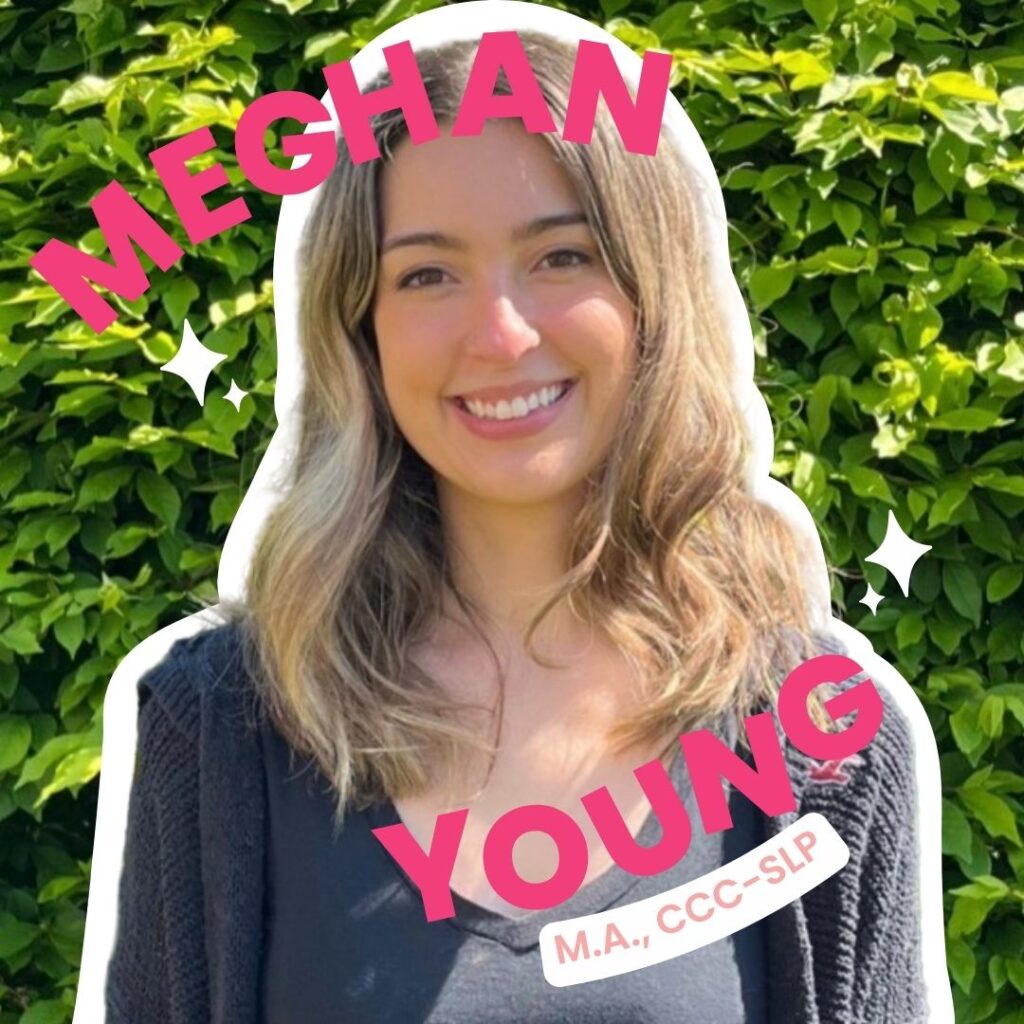
April is Autism Acceptance Month, so we wanted to take this time to shine a spotlight on our Speech Services and how ACP embraces the Autism community as they are through building communication skills! To do this, we sat down with our dedicated Speech-Language Pathologist (SLP), Meghan Young, who serves our Concord and Bedford, NH centers and provides life-changing treatment to kiddos. After being an SLP for over five years and working in a variety of settings, Meghan has now just hit her one-year anniversary with ACP, bringing her knowledge and passion to the learners in her care. Read on to see how Meghan meets little ones where they’re at, showcasing acceptance and inclusivity every step of the way.
Why did you choose to specialize in Speech-Language Pathology, and what does your role at ACP entail through that?
When I started college, I was planning to become a physician assistant. During my freshman year I took an intro to health professions course, and a Speech-Language Pathologist came in to speak about the field. Hearing how much communication impacts someone’s life—and the variety within the field—really stuck with me. I ended up switching my major that same year, and that’s how I found my way into Speech-Language Pathology.
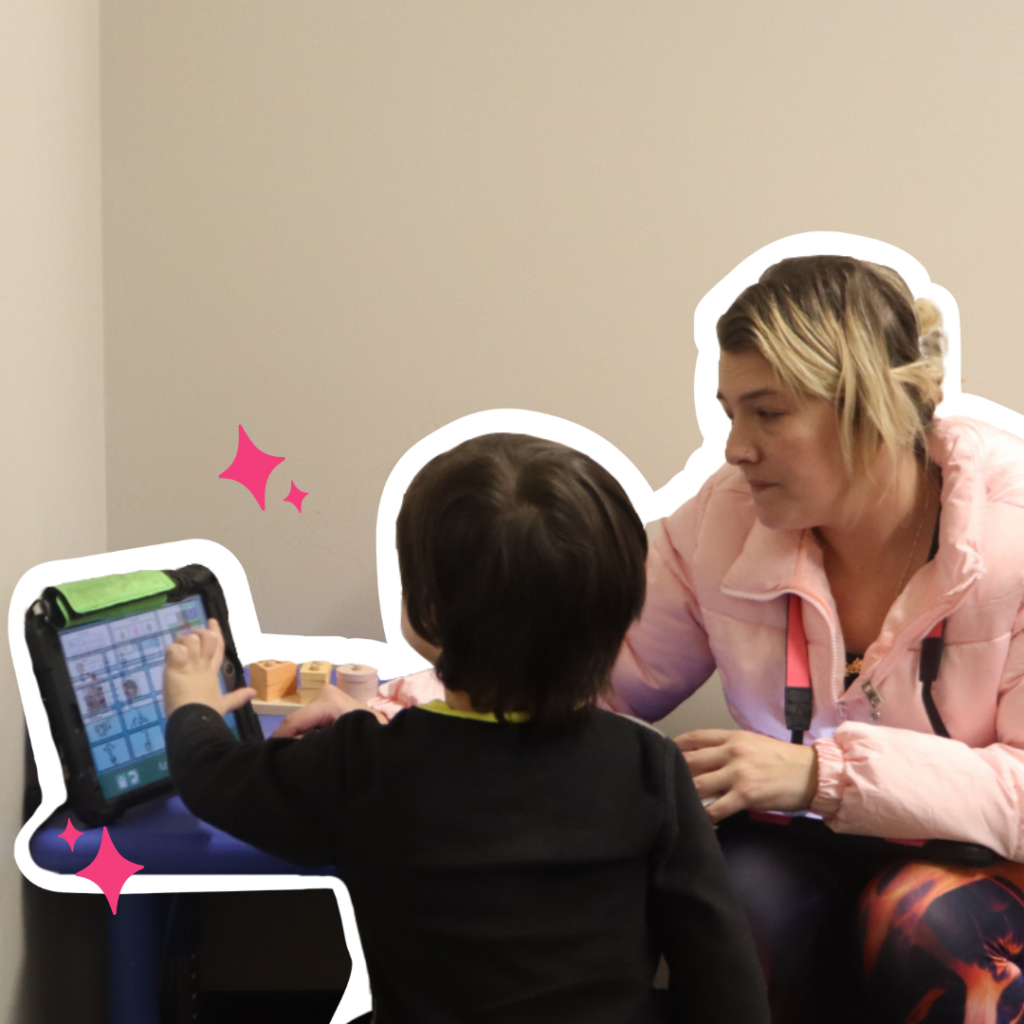
My role involves evaluating children’s speech and language skills, developing individualized treatment plans, and providing therapy to support their communication development. A big focus of my work is helping children develop functional ways to communicate—whether that’s through speech, AAC, visuals, or a combination of supports.
April is Autism Acceptance Month, what does Autism acceptance mean to you, and how does Speech Therapy contribute to this?
To me, Autism acceptance means recognizing and respecting neurodiversity. It’s about undertsanding that Autistic individuals communicate and experience the world in their own ways and supporting them rather than trying to change who they are. In therapy, that means meeting children where they are and joining in their play. For example, if a child isn’t interested in using a toy in a “typical” way, I follow their lead. I have a client who loves when I gently toss a bouncy ball onto his tummy—it makes him laugh. We’ve used that interaction to build communication, like requesting “ball” and working on actions like “throw ball.” It’s really about immersing yourself in their world to support their communication.
One of the things I love about Speech Therapy is that it supports all forms of communication. Whether a child uses speech, AAC, gestures, or visuals, the goal is to help them express themselves and be understood in whatever way works best for them.
How can a prescription for Speech Therapy influence a child’s life?
Speech Therapy can have a huge impact on a child’s ability to communicate and interact with the world around them. When children don’t have a way to express their needs and ideas, it can lead to frustration. By giving them effective ways to communicate, we can reduce that frustration, build confidence, and help them form stronger connections with the people around them. This includes supporting both expressive language (how they communicate their thoughts) and receptive language (how they understand what’s happening around them).
For example, I worked with a child who would “flop” during transitions between rooms. I collaborated with the BCBA (Board Certified Behavior Analyst) and Behavior Technicians to create a simple visual flipbook with pictures of each room. Showing him where he was going ahead of time significantly reduced those behaviors because he understood what to expect.
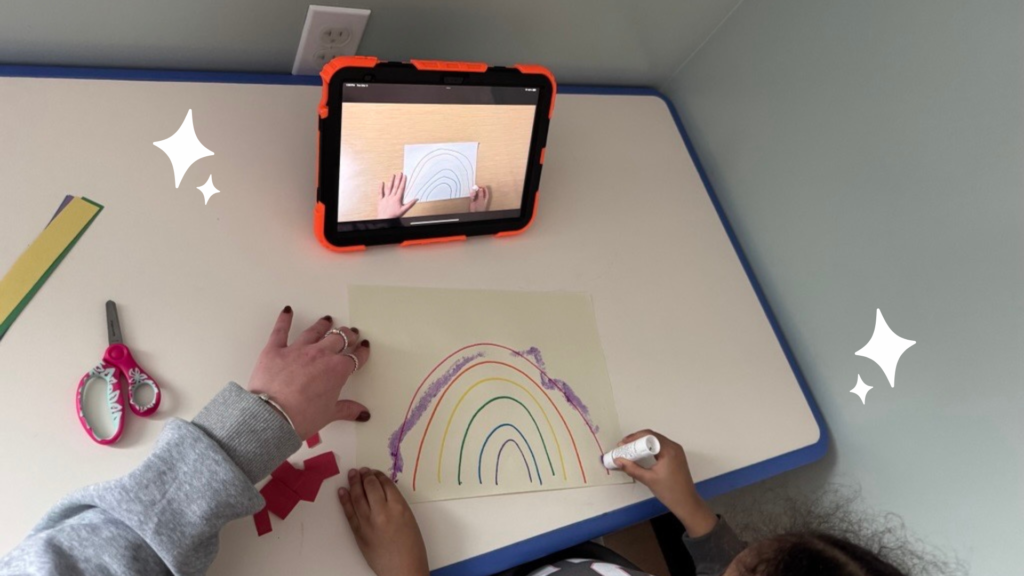
At the same time, we can pair those visual supports with expressive communication, like helping the child label where they’re going or request a preferred activity, so they’re not only understanding their environment but also actively communicating within it. Visual supports like that can make a big difference in helping children process, participate, and communicate more effectively throughout their day.
How have you seen your work influence a caregiver’s life?
For children with limited or no spoken language, introducing AAC can be life-changing, not just for the child, but for their families. I’ve had caregivers tell me that they finally feel like they can communicate with their child because their child can express wants, needs, and even social greetings like “hi” or “hello.” I’ve also seen children begin to imitate language from their AAC devices, which can lead to increased spoken language. Recently, a parent told me their child said “I love you” out loud for the first time. That’s something you never forget.
Moments like that are incredibly meaningful. Even on tough days, hearing updates from families about what their child is doing at home is really rewarding and reminds me why I love what I do. […] I feel really lucky to work in this field. Supporting communication and helping children and families connect is something I truly care about.
What do you think we should all know about the learners in your care? What’s something you’ve learned from them?
One important thing is that Autism is not one-size-fits-all. Every child has unique strengths, interests, and ways of communicating, and it’s important to take the time to understand how to support each individual effectively. With AAC, for example, I aim to give children access to a robust vocabulary. I often start with a larger grid, but if it’s too complex, I adjust to meet their current needs. Some children benefit from symbolic icons, while others need more concrete supports supports, like real photographs. In those cases, I’ll use pictures of actual objects and gradually pair them with symbols to build understanding.
The goal is always to expand their communication, but we have to meet them where they are. I’ve seen children grow from using just four icons on a page to navigating systems with 60 icons, it’s amazing to watch that progression. I also individualize AAC systems based on the child. Some do better with one app over another, so it’s important to find what works best for them.
One of the biggest lessons I’ve learned is the power of visual supports through the Visual Immersion System (VIS). Many of my clients process information more effectively when it’s presented visually rather than verbally. Using tools like communication boards, visual schedules, and AAC systems can significantly support both receptive and expressive language. For example, I worked with a child who could follow one-step directions but struggled with sequencing two-step directions. When we added visual supports, like videos demonstrating each step, it helped him understand and eventually follow those directions independently. Over time, we were able to fade the visuals as his understanding improved.
We’re a few months into the year now, what do you think is going to be the theme for you?
My theme for this year is continued growth and learning. I just reached my one-year mark with ACP, and in this field, there’s always more to learn as research and best practices evolve. I’m always looking for ways to better support my clients, whether that’s deepening my knowledge of AAC or finding creative ways to make therapy more engaging and meaningful.
[…] One of the things I love about ACP is the interdisciplinary collaboration. We have BCBAs, OTs, and SLPs all working together, and that team approach allows us to support each child across all areas of development. It’s really special to be part of a team where we can collaborate, problem-solve, and support each other to provide the best care possible.
Through her clinical skills and dedication, Meghan showcases acceptance every single day by working with her kiddos at their pace to provide them with life-changing communication tools to carry with them throughout the rest of their lives. We often refer to AAC tools as a little ones’ “words,” which is exactly what they are. Our SLPs, like Meghan, allow our kiddos to obtain these words. Words they can use to express themselves, request what they want, announce what they need, and more. By meeting learners where they’re at, we can practice acceptance each day and embrace whatever form of communication grows from their care.
Want to learn more about Speech services at ACP? Go to our Speech Therapy services page!
Written by Eden Osiason