
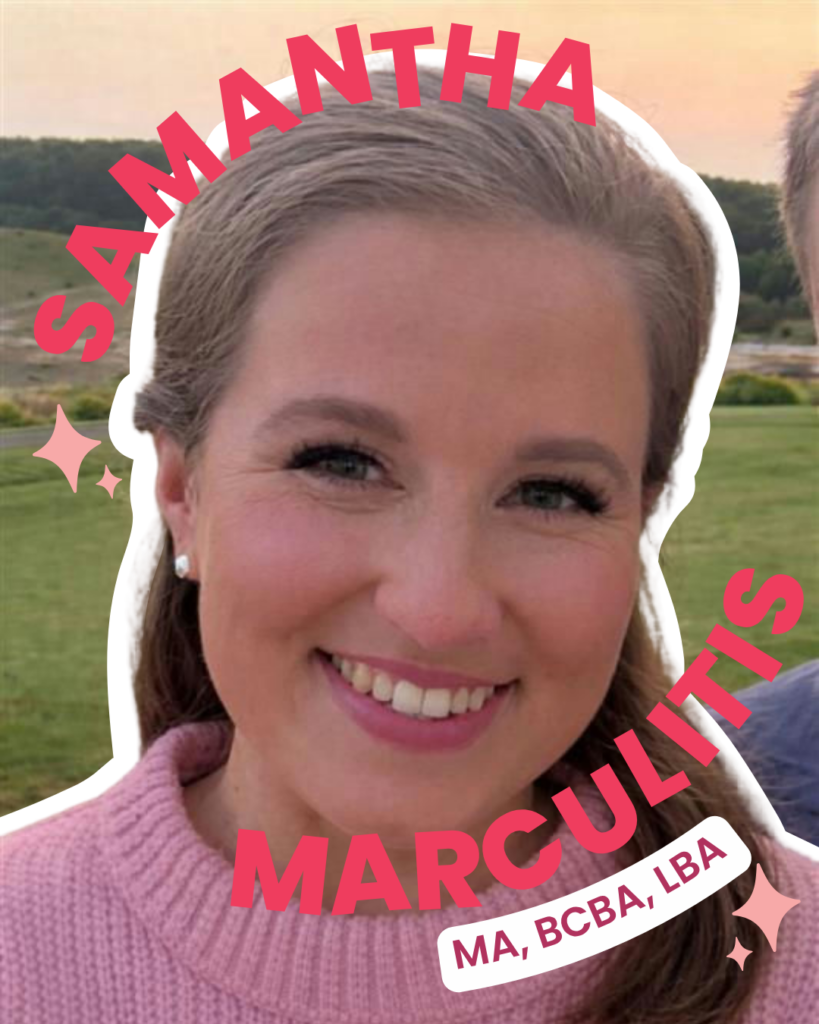
Introducing our life-changing Clinical Director at our Worcester, MA center, Samantha Marculitis! While Samantha just moved to Worcester last spring after growing up in Natick, ACP is incredibly grateful to have her on our team. Not only did Samantha grow up knowing she wanted to work with children, but her passion also remains strong all these years later as she discusses the impacts of Applied Behavior Analysis (ABA) Therapy and Early Intervention services. After watching her parents thrive in the Human Services field, Samantha now takes her turn making a difference in our kiddos’ lives. This Autism Acceptance Month, read and learn all about Samantha and ABA!
Why is ABA so impactful for kids with Autism?
Applied Behavior Analysis, ABA therapy, is a science-based approach that provides individuals with different tactics and strategies that shape behavior to either decrease behaviors that are in the way of making meaningful progress, or increasing skill deficits to close the gap in areas of development that aren’t progressing naturally. It really helps to change the trajectory of development, especially when you start really young.
Have you always been interested in this sort of profession?
I have always been interested in working with children since I was a little girl. I used to play teacher in school with my siblings growing up. I would kind of force them to be the students and I would be the teacher. My motivation and passion came from a desire to help children and families meaningfully experience the world around them. My mom and dad both work in the Human Services field, so I feel very blessed to have such wonderful role models to look up to.
It was just really beautiful to see how much of an impact my parents had. I would go to their work functions or see how they were able to be so valued in their community for all the work that they did. Just seeing all the lives that they touched and the differences that they made for all different kinds of people, I thought that was a really beautiful thing to witness. And they’re really happy people, so they’re doing something right.
I didn’t always start out thinking I wanted to be a BCBA. I went to school initially to be like a kindergarten teacher, and then I got a job as a TA in a classroom with students who were experiencing some behavioral challenges. And I was like, “Okay this is really cool.” I feel like it’s like a smaller setting, and I feel like I had more impact. I taught General Education for a little bit, but then I was like, “no, no, no, I got to go back.” So, I went back to school, I got a master’s in Special Education, and I was a Special Ed teacher. I had a self-contained classroom for students with Autism and neurodevelopmental disabilities, and it was so fun.
But, then I really realized that as important as school is, I really love working with individuals to make individual progress towards just existing as a human. How can I help you function in society? Then I went back again, got another master’s in Behavioral Analysis, and I am so happy that I did that because I feel like I can tailor treatment, that’s the beauty of ABA, is you tailor the treatment. Everything is science, evidence-based, but you take research that’s been proven to work, and you apply it and make it individualized for your client. There’s no push to, you know, get back to class. There’s no push to do anything but just support and be in the moment, and I really love that.
I did home services for a bit, which was so fun and awesome. Taking on this role, I did stop doing home services and it was the same thing and just working with families. Knowing that I was able to help a family like achieve a goal that they had as a family or, now they can go to the grocery store together, or do the basic things that we take for granted is so special. I really love helping people do those kinds of things.
I hadn’t heard of ABA until after I had graduated undergrad. When I was a special education teacher, one of my friends who is a BCBA was like, “hey, you have like a knack for this. Would you ever consider it?” I was like, “I don’t even know what you do.” She said, “Well, sit down, let me tell you.” Then I was like, “Oh my gosh, I must think about this further!” And I did. And here we are.
How would you define Autism?
I use the scientific definition of Autism from the DSM-5 because, as a Clinical Director, we are providing a medical service. To tie it all together using everyday terms, Autism is a developmental disability that’s characterized by deficits in social communication, so how we communicate with each other, how we request, how we protest, and then also restrictive and repetitive behavior or interests. So, thinking about the same thing over and over, or wanting to play with the same things over and over, and there’s difficulty in interrupting that.
How does an Autism diagnosis influence someone’s life?
Autism is a spectrum, so that means that one individual’s life with Autism is not the same as the next. Some individuals may experience a significant challenge with communication, interfering behaviors, and skill acquisition. While others may experience mild or moderate challenges. It really depends on the individual.
Can you talk a bit about the impact of receiving Early Interventions?
The wonderful thing about ABA is that it’s a science, so it applies to anybody, Autism diagnosis or not. The beautiful thing about ABA is that we treat the behavior, not the diagnosis. In this setting, we are treating people with Autism, but there’s a lot of research that shows the earlier that you are getting involved with wrap-around services, the more likely you are to close those gaps and have more success in the future because your brain is soaking it all up, and you’re at the perfect age, or your brain is at the perfect spot to receive all of these new things. Whereas later in life, it’s much harder to shape behavior when there is more of a learning history. If you were to start looking at providing treatment to someone who’s 21, and who has never had interventions before, the outcomes would be very different than someone who is 2-3 years old.
I like to think about it like, I’m 30 years old. If somebody told me today that I now have to switch driving my car on the other side of the road, it would take me so long, and it would be near impossible for me to figure out how to do that. I’d be really overwhelmed, really stressed about it. I might not even want to drive anymore.
Can you give some examples of how a specific strategy can address those medically necessary goals for a child with Autism?
When we see problem behaviors, I’m thinking of the population that we work with is really little kiddos right now in my role, they’re still building their communication skills and things that might occur are tantruming, crying, those kinds of behaviors. When a kiddo is trying to access something and they might not have the word for it, it’s easier and quicker to cry or to pull mom’s arm or to have a big behavior because that’s a faster way of getting a need met. We use something called functional communication training. That basically teaches the individual that we can use a different way to have a quick response that doesn’t involve problem behavior.
For example, slowly over time teaching someone how to say, “cookie.” We can shape it over time, in the beginning they’re saying “ka” and then a couple weeks later, a couple months later, they’re saying “cookie,” maybe they’re pointing to a picture of a cookie. We’re using reinforcement strategies to help them acquire building that skill of requesting the cookie instead of crying or engaging in other problem behaviors to access the same thing.
Imagine just being trapped in that little body, having so much to say and so much to communicate and nobody’s understanding you. That must be so frustrating. Functional communication is the first thing that we really do, because there is a reason why problem behavior or interfering behavior is happening. We look at the functions of behavior, it’s usually tied to one of four functions. It’s really important to just put yourself in that individual’s shoes, what are you trying to communicate right now? Because all behavior is a form of communication.
Why is the distinction between Autism acceptance and Autism awareness important?
Awareness is just knowing it exists. We have an awareness of all different things, but do we accept them? I think acceptance is really digging deeper and appreciating and valuing something. I like to use the example of a rainbow because we all know rainbows exist. But then if you look closer and understand and accept rainbows, you know how the light has to shine perfectly on millions of droplets of water to reflect that rainbow. Whereas you can just walk by and say “Oh, that’s a rainbow,” there’s a deeper appreciation if you accept the whole picture of the rainbow, all of the rainbow.
What do you want caregivers of little children with a recent Autism diagnosis to know?
Lean on your support systems. It can be an unnerving piece of news to hear but know that there are so many resources out there to support you. Even if you don’t have a support system, there are things out there in your community, people that you can lean on, medical professionals that you can seek guidance from. But I would really encourage young children with Autism to get ABA therapy as early as possible.
I also want to add if it’s not ABA therapy, there are so many different community opportunities. Things like reading at the library, or accessing programs at the YMCA. There’s so many other programs too, not just ABA, but I obviously am a big proponent of ABA because that’s my world. And they’re great in combination, too. That is actually the best thing ever, because nothing in this world is great on its own. Things are great on their own, but everything is better the more you add to it.
I actually feel really lucky to be a part of an interdisciplinary team because I learn so much from my colleagues every day and we just collaborate so well together and the kids are getting so much more out of it. It’s awesome. There’s a lot of places that really just hone in on the ABA part. And for some individuals, perhaps that’s what they need, but at this age and with the level of impact we’re seeing for this specific population of people, the interdisciplinary approach is perfect.
What is your favorite part about being the Clinical Director of Worcester?
One thing I really love is getting to have more of a leadership role in helping our BTs and RBTs move on to make steps towards becoming a BCBA. I think that it’s really fun to mentor and to teach and share my passion for the science. It’s really wonderful. I also adore working with all of the families and seeing them on a day-to-day basis and just getting feedback and hearing things that are going really well, or if I’m lucky, parents will say this might not be going so well and I have the ability to advocate and make that change. I feel really lucky to be in this spot to just be all over and make the center a meaningful place for everybody, staff and families and clients.
What one word describes Team Worcester?
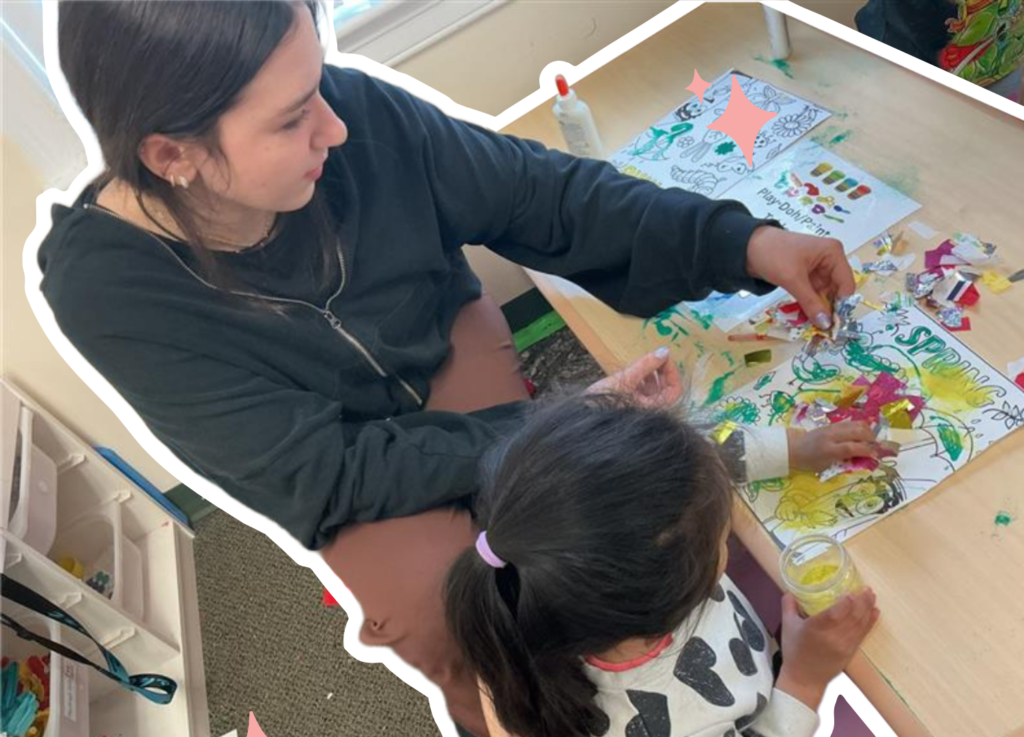
I’m going to say vibrant. [Worcester] is full of laughter and fun and our staff are so amazing, and they really get in there with the pretend play. Not every moment is a good one, but a majority of them are because our staff are so vibrant. Even in the tricky times, it’s so nice to have such a collaborative, supportive team here. It’s so nice. The tricky moments don’t even feel tricky because we have such a good team.
While managing our Worcester center, Samantha brings light and positivity each and every day. Her passion for the science behind ABA demonstrates her clinical excellence and desire for innovation, consistently learning new techniques and practices to provide the best services possible. By looking at each learner in her care individually, she refines treatment plans and ensures they are designed to be most beneficial for every family. By prioritizing treating the behavior, not the diagnosis, as said by Samantha, ACP continues practicing acceptance and inclusivity, not allowing labels to cloud judgment or expectations.
Currently home to Occupational Therapy, Speech Therapy, and ABA Therapy services as well as the Visual Immersion System, the Worcester center is perfect for your family.
Want to learn more about Team Worcester? Go to our Worcester locations page!
Written by Eden Osiason