
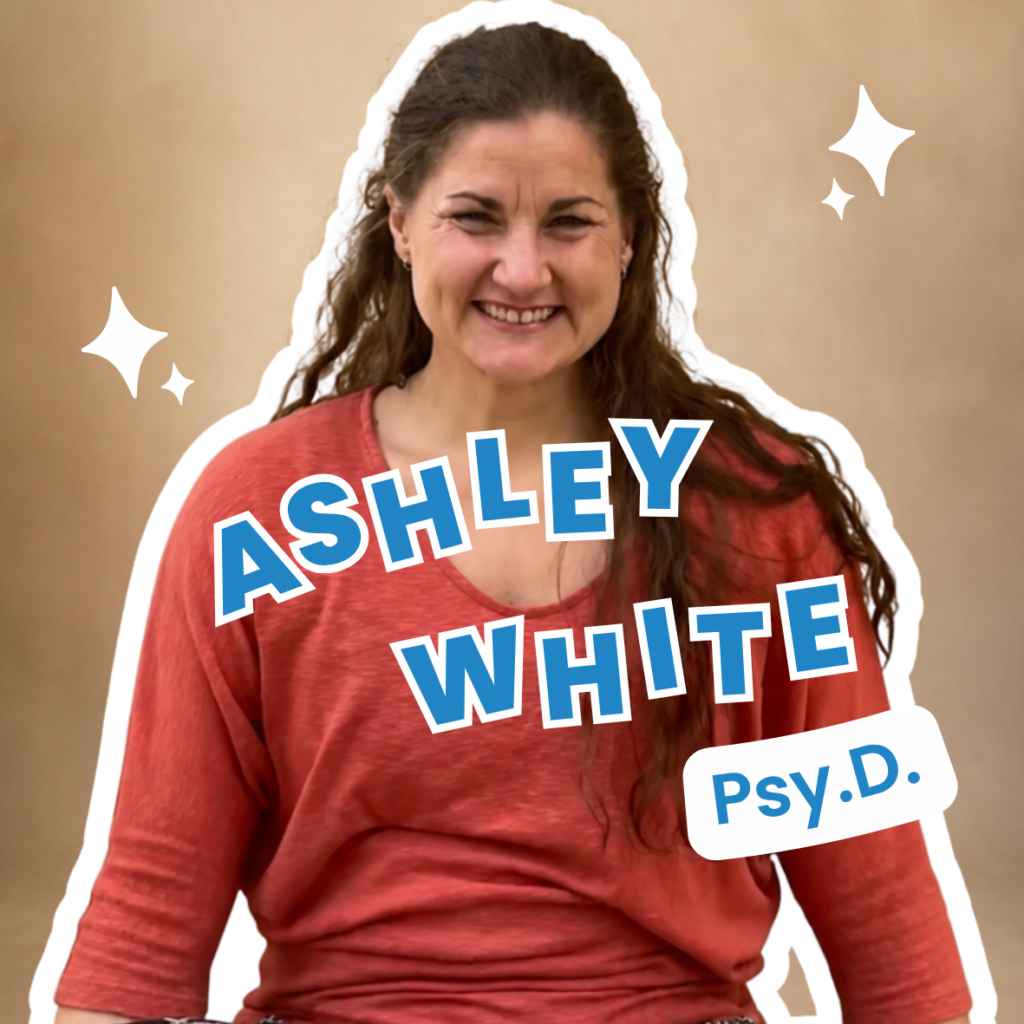
Meet Dr. Ashley White! Dr. White is a Licensed Clinical Psychologist in Rhode Island and Massachusetts. She joined Autism Care Partners in 2023. She graduated from William James College in 2019 and has a strong clinical background in the areas of multicultural and global mental health and treatment of trauma in children and families.
Enjoy our conversation with Dr. White about her background, the assessment process, and her favorite things about her role. We know you’ll love this conversation!
Tell us about yourself.
I’m a Clinical Psychologist. I focus on children and family work. In the beginning I did trauma therapy with children. So doing trauma therapy when kids have had something challenging come across their life and supporting them and processing and handling that, which is also supporting families in that way. But then I was brought into the world of Autism Care Partners through one of my great friends, Dr. Rebeccah Costa. We went to graduate school together and she was like, “Hey, I think you would really like this work, and more Diagnosticians are needed to support getting access to care. Would you be interested?” She really guided me through that process. Now I have a little bit of a hand in different aspects of child psychology, which is really cool. Other than that, I really love to travel, do yoga, craft … so I keep myself very busy! [Smiles] I have a lot of energy, which is helpful when you’re doing assessments for kids under 5!
Did you grow up in New England?
Yes, I grew up in North Central Massachusetts, near the Fitchburg, Leominster area. I went to my undergrad in the Berkshires, in Western Mass. Then I went to graduate school in out near Boston. I moved for my residency. Then I also moved for my postdoc, but then I ended up coming back to Massachusetts around the time of COVID, because I feel tied to the community here and the resources that we’re able to have.
When you were little, what did you see yourself doing when you grew up?
Funny enough, my first job I thought I wanted was to be an Anesthesiologist. I remember not knowing how to even spell that. [Smiles] I had had surgery in the 2nd grade. I just thought it was so cool that they had these doctors that put people to sleep. It just fascinated me.
So, I actually did think that I was going to become a doctor. But going through high school, I actually had a lot of learning challenges myself. I knew that math and science would have just been really difficult for me. Then I also knew that I really wanted to be a helper of some sort. And so, Psychology kind of called to me in that way. And the reason I ended up getting a doctorate was only because I wanted to be able to have the highest training in that area and able to be really informed to the best of my ability. I decided to go to school for a billion years to continue on.
So, it evolved, but I think I just always kind of knew I was going to be a helper. I always really loved like working with kids, being around kids. I always babysat. So, I think that’s part of what I also knew.
How did you find your passion in psychology and diagnostics?
Something that guides me, especially in work with very young children, is I really feel like there’s a hidden gift in working with children and intervening with children when they’re young.
That sometimes it’s not always seen, or you meet a lot of Psychologists or helpers out there that are really fearful about working with a two- or three-year-old. For me, if I look back on my life, I think about different pockets or places in my life where I maybe could utilize someone when I was very young. And I think that maybe things would have been a little bit easier for me growing up or a different outcome in life. And so that kind of has driven my passion whether it’s in my therapy work or in diagnostics … Working with younger kids and their families and helping them to find a path for better outcomes sooner. I think that’s really where it originates from is seeing that advantage and knowing the power and timing.
What do you do within your role?
As a Diagnostician at ACP, I participate in intakes, and that’s where there’s an initial office visit, which is where I meet with a parent or caregiver of a child, and I hear what really has been happening for them, what some of the challenges and concerns have been. I really like to just hear from them first before I jump in with questions about what’s happening, because typically parents can give me a lot of information. They see that child every day.
From there, we set up a time to do our testing and assessment session. Usually for my assessments, I’m really just engaging with kids under 5, where we only usually need one session, which tends to be about an hour, and we engage in the assessment, and then we set up another follow-up time to meet to do a feedback session and talk about recommendations and next steps.
What does the diagnostic process look like?
I always tell parents that first, it’s pretty low stress on the child. Sometimes it can be really scary to think about like, What are they going to do with my kid? What’s going to happen? Are they going to have a meltdown? Are they going to not even want to walk in the door? There’s a lot of anxiety sometimes, especially with when a child is struggling. Typically, I’ll have the parent fill out some self-report forms. The reports are going to ask, What do you see your child doing? … Different behaviors. They’re going to ask specifics about their social interactions and some symptoms they’re seeing.
And then while they’re doing that, I engage with a child usually on the floor, and I try to engage them in some different play activities to see how they interact with the environment, see how they interact with me.
I also tell the parent too, I don’t hold any judgment. If the child wants nothing to do with me the whole time, that’s okay. Or if they’re really interactive, that’s okay. You know, I’m able to get my information I need for my assessment.
My assessment is called the ADOS. It’s the Autism Diagnostic Observation Schedule. And what this really is, is an observation with some of those interactive activities. That’s how I get my diagnostic clarity on some of what is happening for the child within their engagement in the social environment. Then I connect that observation with the parent report forms. Sometimes you’ll get sent home with teacher forms too, depending on where that child is during the week.
But overall, typically kids think of it as just a time where they’re coming into play with this random lady. [Smiles]
What kind of things do you look for during this process?
Typically, I’m looking to see how a child interacts both with the environment of the room, myself, and then toys. So, I’m looking to see what type of initial social interactions they have. Usually, I start looking at this aspect right when they walk in the door. Do they look at me and say, Hi? Do they not even notice that I’m there? Do they wave? Do they reach for me? Do they turn their back towards me and play on their own?
I’m trying to look and see what kind of verbals and nonverbals they’re using. If the child is nonverbal, that’s also okay, but are they using their facial expressions to look at me? Or is their face kind of blank? How’s their eye contact? I’m looking at those types of things.
Then I also try to engage them in some play. If I pick up a doll, and they have a doll and I say, Hi, and try to engage in a little play enactment … Do they jump into that with me? Or do they kind of just maybe not even look at me and just keep doing what they’re doing? Trying to see how they’re able to engage in cooperative play or even imaginary play. If I tell them that it’s the baby’s birthday party, are they able to connect and know what a birthday party is or how it goes or what songs we sing?
The other aspect is how they interact with the tools that I use, so the toys. Do they put all the toys in their mouth, because they really like that as a sensory thing? Do they rub their hands on the toy or rub it on their face? Do they really like the wall and just rub their hands or body on the wall? I’m looking for those things.
I would say lastly, another thing I’m looking for is, are they engaging in any sort of repetitive movements of their body? Do they really like to spin or tilt their head or close their eyes or look up at the lights? What kind of behaviors are providing them some sort of stimulation or sensory needs that I’m seeing.
What are the next steps in child’s journey after an Autism diagnosis?
Something I always tell parents is no matter what the outcome is for their child, whether they receive a diagnosis or not, they are still going to get a report completed, and they are still going to get recommendations, for example if they have communication difficulties but not Autism.
If they do meet criteria for Autism Spectrum Disorder, typically I will go into the different recommendations. Our number one is always ABA Therapy. Research has informed that it’s actually the most empirically evidence-based, which means they’ve done studies forever on ABA, and that research shows that ABA really supports children with Autism in learning new skills, decreasing some of that emotional distress, and helping them engage in social interactions with others.
So, I might talk about the different formats that ABA can be provided in and explain how we can support that therapy. Luckily, with Autism Care Partners, we have ABA centers, which I really like.
The other recommendations that I typically provide are Speech Therapy. This also depends on where the child is in their speech development. Some children with Autism have wonderful speech, no concerns at all. Some children maybe are nonverbal. So, depending on where their speech development is at, I would say that we also provide that through Autism Care Partners at our centers, which can be really helpful.
The last is Occupational Therapy. If there are those sensory needs, if I’m seeing that they’re doing a lot of flapping, jumping, spinning, or having a lot of sensory sensitivities, I always refer for an evaluation for that, because that’s not my expertise. I also provide the support to parents to know at some of our centers we provide Occupational Therapy, as well.
Having all-inclusive services can be really beneficial. I always tell parents wherever you decide to receive your services, I think that it should be somewhere where you trust and somewhere where you know you can get to and be consistent with, because that’s how it’s going to work.
Why is getting an evaluation for Autism so important?
First, you must have a diagnostic report completed, typically by a Clinical Psychologist, to receive therapy services through insurance. We are an insurance-based medical system, and to gain access to services, you need diagnostic codes that would then provide you those services. In a systemic and logistical way, individuals have found that they cannot access services without an evaluation.
The other really huge part of that is the evaluation is really going to support clarity on what is actually happening for that child. The internet, Facebook, social media, TikTok can have a lot of different ideas and thoughts about Autism Spectrum Disorder or diagnoses that might have cross symptomology. It’s really important to meet with a medical professional and talk about symptoms and a potential diagnosis before accepting information that might not be as reputable or supportive.
Getting a clarified evaluation is really important, so you’re not jumping into avenues or services that could then be harmful because of something else that’s going on.
What’s something that caregivers might need to know about the future if their child does receive this Autism diagnosis?
There are a few things. First, they’re not alone. The really wonderful thing Autism Care Partners is that if you do receive a diagnosis, we don’t just hand you a report and say, Good luck with your kid. See you later. We really like to be supportive and guide you in the process to accessing services you need. Even if our ACP centers are not in your catchment area of where you live, we really still do want to support you in accessing services, like Autism advocacy groups that could point you more in the right direction.
You’re never alone in navigating a diagnosis.
And the other thing that I always tell parents is, even after our assessment is done and complete if you think of questions, or if concerns are coming up, you can always reach back out to us. I’m always available to answer questions or our Family Liaisons and Family Partners are there to answer questions. Your journey from getting that diagnosis to then getting services and all the in-betweens, you’re not alone in it because it can be very overwhelming. And sometimes parents need some time to process after the feedback session. So, if you do come back and call us in a few weeks later, we totally understand that maybe you just needed some time.
What motivates you to keep going on the hard days?
I think what definitely motivates me to keep going on the hard days is knowing that when I see children and families, sometimes it’s in the midst of their most challenging time. And something I like to explain to them is that this is the most challenging time it’s going to be. Things will get better. And that does really inspire me to keep moving forward and doing this work.
I believe that access to care is so important and essential for children and families and that they need support from a Diagnostician to access that care.
Knowing the ability that I have to support that, I think is really important. When I see the children that I was able to provide an assessment for, when I see how much they grow and change and learn throughout those therapy services, it’s remarkable to me. I love that aspect.
What song would you add to ACP’s playlist?
Mount Everest by Labyrinth. That’s a good one because it’s like, Mount Everest has nothing on me. I’m on top of the world. It’s motivating!
Want to learn more about Dr. White and the rest of ACP’s Team Psych? Explore https://autismcarepartners.com/services/diagnostic-evaluations/ today! Ready to get started? Contact us by phone at 800-679-3609 or complete this form to inquire about services available near you! We can’t wait to connect with you!