
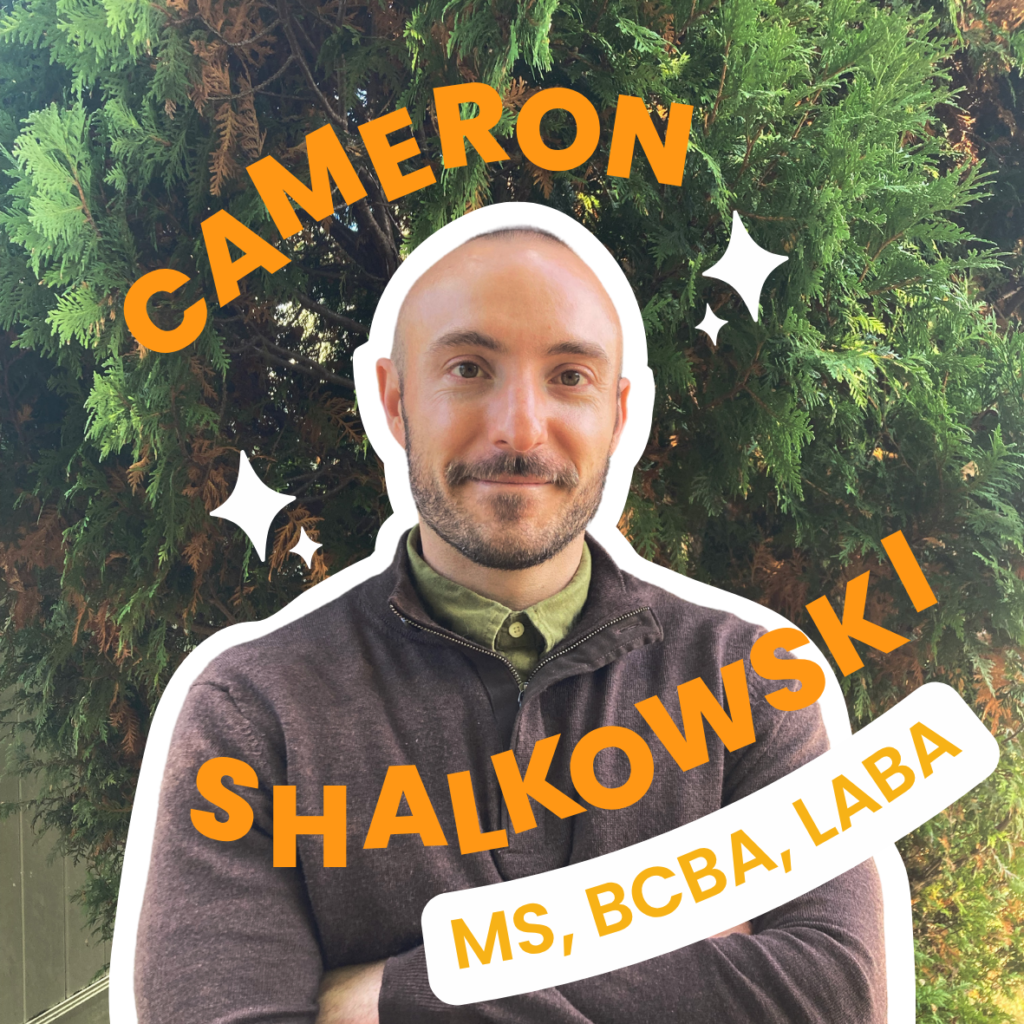
Cameron Shalkowski, ACP’s AVP of Service Delivery sat down with us to explain what this Applied Behavior Analysis (ABA) service is and how it’s conducted. ABA is considered the gold standard for Autism therapy, and for many individuals it can have a life-changing impact, allowing them to live life more comfortably and autonomously. At ACP, we address many skills others may take for granted, like dressing, feeding, brushing your teeth, taking turns in play, and more. By addressing these necessary skills alongside our learners and their families, we’re improving capabilities before challenges and harmful behaviors become routine. Continue reading to learn more.
What is Applied Behavioral Analysis?
ABA is a science of behavior change. It uses the principles of learning and behavior to improve socially meaningful skills, and it relies on data to determine whether our intervention is effective. I say “socially meaningful” because it means we only address behaviors that are developmentally appropriate and important. And we know what is important through conversations with the parents and assessments that look at the individual child’s development alongside the milestones of a typically developing peer. I’m looking at why a behavior is occurring, what skill may need to be taught, how the environment can be adjusted, and whether the data show that the client is making meaningful progress.
ABA should be compassionate, individualized, and focused on quality of life, not just compliance or behavior reduction. One of the things I really, really love that about this field is that we are very forward thinking. I think we’re very, very humane and we’re very, very individualized. And I think that’s the best part of it. Whereas when we talk generally, we tend to put people in categories, which makes sense if you’re talking on a large scale. But when you’re talking about real change, there’s individual reasons for behavior.
When we go to work with families and children, it’s that mindset that this is a new person, entirely new. We have our experience. We know what works and it might apply here, but it might not.
We’re constantly treating every child as a completely new individual.
If you’re thinking about a five-year-old, where are five-year-olds typically at developmentally? They’re playing a lot. They’re exploring the world for the first time. They’re exploring social relationships. All these things are challenges children with Autism often struggle with. So, we’re looking at those skills very closely.
We’re really trying to teach functional communication in a broad sense, which isn’t always vocal. For example, if I threw a glass against the wall, you might look at me. And if that behavior was attention seeking, the functional learner would observe, when I say, “Hey!” you look at me. I get the same result as throwing something. I don’t have to throw a glass against the wall. We’re teaching children who struggle with those functional skills healthier ways of showing someone that they’re wanting attention or need something.
What’s nice and beautiful is that we are working with children earlier. We can jump in and make sure that they’re not learning high magnitude maladaptive behaviors, like throwing the glass.
We look at play skills, social skills, coping skills, like how are you handling yourself emotionally, especially in front of other people. Because if you are denied something or if you want to play a game and someone says, “No” and you have a tantrum, it can hurt your social relationships.
What do you see in the near future for ACP?
We have strong people on the team, and I feel like we are continuing to get better. I think that the team really cares about what’s happening, even outside of their own departments. We care about this company. We care about everyone. We care about the clients, and that’s really important to me. We are led by good people.
I’ve thought of the company as a prototype; it’s something that we are constantly improving.
Why did you pursue this work?
I’ve been around human services for a while. My dad is similar to what would be a BCBA nowadays. He’s been working with people as a consultant, behavioral-type Psychologist for people with intellectual disabilities for quite a while.
My mother also did a lot of direct work with people with similar needs. Sometimes she would pick me and my sister up from school and she would have her clients with her. It made me feel comfortable with all types of people.
In my senior year I took an Applied Behavior Analysis class. That became my whole thing, and then I got my master’s degree which led me to where I am now.
What keeps you engaged at work?
I remember the days as a Behavior Technician or even a supervising BCBA, and a three-hour session can feel like 8 hours through a perfect storm of events. I keep that in mind a lot, especially when I’m walking around the centers. We shouldn’t expect people to be just having the best day ever every single day. We continually strive to make an environment that is conducive for that.
What I’ve found in situations where the client isn’t engaging is that it helps to entertain yourself within the client’s world. It draws them to you, but also it makes the session go faster. How would you play? That’s something that I’ve learned in getting a child to engage is engaging yourself.
How do we create an environment at the center level that makes the day move a little bit faster for Behavior Technicians and clients while maintaining the highest clinical quality?
What thought do you want to leave with our audience?
Doing our job well benefits the individual clients that we’re working with, but it also impacts positively the entire field. ACP being a front runner in clinical quality is going to make other companies also become more clinically excellent. That’s really motivating.
Learn more about Cameron and the rest of ACP’s compassionate leadership team by visiting AutismCarePartners.com/About today!
Still want more? There’s lots to explore on our website. Consider browsing through our Services page to learn more about ABA or our Speech, Occupational, and Feeding therapies. You can also explore Autism Facts to read about the myths and truths about an Autism diagnosis. When you’re ready, we’d love to hear from you. Give us a call at 800-679-3609 or ema