
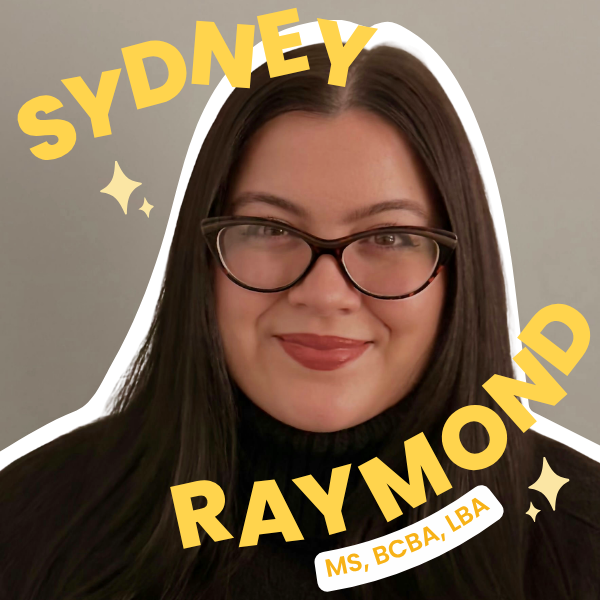
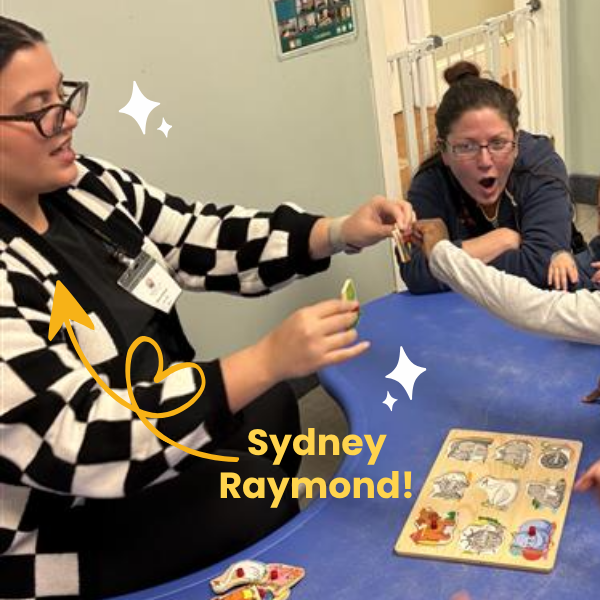
Sydney Raymond, MS, BCBA, LBA serves as our Clinical Director on Team Pawtucket and is the epitome of what it means to grow with ACP. Sydney started as an intern, became a Behavior Technician and then BCBA and now leads our efforts in Pawtucket, RI. We sat down with Sydney to hear about her career and perspective on Developmental Disabilities Awareness Month. Read how Sydney puts her heart into all her duties to uplift an Autism-affirming culture!
When did you first start at ACP, and when did you first find your passion for working in ABA?
It was just a random job experience. I was getting my bachelor’s in psychology, but that was more so supplemental to completing my other side of things, which was pre-med. I was going to go to medical school, that’s what I wanted to do. This was just an extra experience outside of your typical volunteering at hospitals and working in a pharmacy or doing all that kind of stuff. I wanted something different. I was actively in the application process for medical school, and then had a massive change of heart and decided that I wanted this instead. And I’m very happy I chose this. This is definitely what I wanted.
I started as an intern BT at the Warwick site back in 2019 and then I was promoted to a Senior BT in 2020, which then resulted in me coming to Pawtucket. […] Then I became a Treatment Coordinator in 2022, and I would say that’s when I started to really settle in, I decided to get my BCBA, and I got that in 2023, and then in 2024 became a Senior BCBA, and then last month received my promotion to be the Clinical Director here. I definitely owe a lot of my professional growth to Pawtucket. I feel like most of my growth happened here, but there was a ladder that I climbed to kind of get to where I am now, both professionally and in regard to just how I felt about the field. Initially, this was just something to try out.
I always joke and I say that I grew up here. This is where I grew up because I wasn’t grown when I started, I was just learning the ropes. I say that I feel like I grew up with the company, the company grew up with me. I always felt that back and forth. This feels like the pinnacle of my center-based career. Obviously, there’s other things outside of here that could happen later in life, but for right now, I’m very happy to be at this point.
March is Developmental Disabilities Awareness Month. What does that mean to you as the Clinical Director of Pawtucket?
I think the biggest thing for me is that it means autonomy. I feel like there’s a lot of lumping people together or lumping clients together that happened back when ABA started, where it was, “All right, this is Autism, this is this disability, this is that one.” I feel like we really need to see kids on an individual level, so the biggest thing that I think comes out of our center to support developmental disabilities is developing autonomy. Our kids are not just a number. Our kids are not just a client that has to go to the special education classroom and become a number. Our kids are people. I also feel that independence is another big thing we come out of with here.
Autonomy and independence are the two things that I really feel are important with the work that we do. Yes, we do our pre-academic tasks, we do our toilet training, we do our behavior stuff. But at the end of the day, when we look at those clients graduating, the thing that really sticks with all of us is, “Have we helped this person develop their own personality?” We don’t want to change our clients. We don’t want our clients to stop having their special interests. We don’t want them to change who they are. But did we help them to achieve independence in a way that helps them to maintain their own person?
And that’s the same with our families, too. I think that’s another big part of it. While the client might be the person who we’re defining as the person with the disability, the stakeholders, the families, those people are just as important to help develop autonomy with them. […] So really helping people advocate, be autonomous, and be independent is what I think is most important in our work.
There’s a harsh reality out there. It is a really harsh reality. I don’t want to say I’m cynical, but I like to be realistic. Every child is going to encounter the real world, and it’s important to me that we help them to learn to say no and to set boundaries and to not accept people speaking for them. That’s very important to me. Every kid, neurotypical or not, will encounter hardship throughout their school career, and I want to make sure our clients know how to speak up for themselves and to make sure they’re not being taken advantage of. It’s very important with vulnerable communities to be able to advocate in that way.
How do you uplift the developmental disability community in daily work? In your leadership?
I feel like the biggest thing is just encouraging that people can. You can do things; it might be hard. And being honest. Honestly, being honest is probably the biggest part of uplifting this community. I am not going to lie to you and tell you that this is going to be easy. I’m not going to lie to you and tell you that we’re going to do this one protocol, and that’s going to change your life. I’m going to be honest and tell you, we’re going to work together, and you can do hard things. And I’m going to help you to do that, whether it’s parents or staff, helping them develop their own advocacy and autonomy and confidence to do the hard things and to lean on me for support.
At the end of the day, you might have a really tough day with your client, but we can always come and talk about it. Let’s see what we can do differently. What can I do to help you? And with parents, the same thing. We might have a hard IEP meeting, and you’re not seeing it the way that you are wanting things to happen, but you can speak up. You don’t need to be silenced. We’re not in a world where anybody deserves to be silenced. So really just pushing people to feel their own strength, whether it’s a staff member or a parent.
The big thing about being a leader, specifically when working with vulnerable communities, is listening to people and taking action points from that. It could be something as simple as, “Hey, the way that we’re organizing this isn’t working out. Let’s change that. Let’s sit down together and change that.” So, taking action I would say is a big part. Listening, follow-through is super important. I always tell our families if we’re not following through with protocols, nothing will change. If I’m not following through with what I’m telling you, then I’m not going to expect you to see me as a leader. So, following through is a big part of this as well.
Do you think that your background, having been an intern, a BT, and a BCBA, has influenced how you’re treating this role as a Clinical Director?
100% I don’t think that I could perform well without that. I’ve worked in every role for at least a year or more and having that experience is invaluable. I don’t think that’s something that you hire, that’s something that you grow, and ACP grew with me. It was 100% probably the most valuable piece of training I had was being able to walk in everybody’s shoes and be part of growing those roles, changing those roles. The roles are different now than when I worked in them. So that is definitely the most important part. That’s the highlight of my resume when applying for Clinical Director was that I’ve done it all.
As you talked about how you started back as a BT, can you tell me a bit about that growth you’ve witnessed from your perspective at ACP and Pawtucket?
I worked here before we were ACP. So, before ACP, we were ABI. ACP was probably the best thing that happened to what was ABI. It was really nice to have this fresh structure come in and kind of propel the company forward. I always like to highlight the changes in the last few years have been super helpful to the growth of the company. There’s been structural changes, there’s been changes to different policies, and it’s all been positive change. I feel like we’ve really pushed clinical excellence both on the License Provider side and our BT side. There’s constant new changes coming to keep pushing us towards being as effective as possible.
The leadership team restructured in a way that allowed for support on the ground level, which I think is so nice. It’s nice to kind of see my boss, as opposed to never seeing my boss and just knowing that they exist. I love having hands-on from leadership, having them come down, see us, see the centers. I know Nicole Geca, our AVP in Rhode Island, she comes once a week give or take, and that’s insane. It’s so cool to have somebody that comes in here and wants to see our progress and wants to problem-solve and wants to make everybody feel heard. I think that the growth has been pretty astronomical from where I started.
Pawtucket has grown incredibly since I started. I was a part of actually building Pawtucket, like physically. Funny story, I met my husband building Pawtucket. I remember, my client called in sick and they’re like, “Oh, just go to Pawtucket. Go help build the center.” So, I remember being part of helping put together the center. […] Moving forward six years, Pawtucket actually opened six years ago this month, leadership’s become a lot more polished and being the capacity center. We have so many systems in place. Anybody who has worked with me knows I’m a really big fan of rules. I love rules and systems, and ACP gave us the ability to have those rules and systems that protect clients. It protects staff, it protects LPs, it helps everybody be happy.
Everybody has room to grow, including us, but I’m really proud of how far Pawtucket’s come from 6 kids and a little bit of disorganization to being very organized and polished and a role model for a lot of people. And I’ve already mentioned I joke that I grew up with ACP, so we grew up together.
What does it mean to you to be the new Clinical Director and have the capacity now to lead and institute more growth?
Honestly, I feel like I’m having a field day. I feel like I’m having an absolute field day! I’m just asking people to give me feedback. I’m sending out polls, trying to get as much input from other people as possible because I’m just one of the 45 people that work here. Doing everything that I can within the capacity that I have. Often going to my boss and saying, “Hey, can we do this? Can we do this?” Making sure things are good but getting feedback from everybody else, because it’s probably going to impact everybody else in the center more than it’ll actually impact me. I want to make sure that other people are feeling heard. I really enjoy that. I love being a point person for things. If you talk to other people that have worked with me, I feel like I’ve kind of developed that relationship with a lot of people.
But I really like the ability to make lasting change. That’s something that’s super important to me. I don’t want to just sit idly by. I would like to make a change, even if that’s an uncomfortable conversation. Sometimes it’s not easy to do that. Sometimes you have to be told, “no.” But I’m okay with doing that if it’s giving our staff a voice to other people. Not every staff member is going to feel comfortable reaching out to somebody in leadership to ask about something, but I’ll do that. I don’t mind. The worst thing that’s going to happen to me is they’re going to tell me, “No.” So, I like being able to be a voice for others.
What has it been like working at such a full center? How is Pawtucket unique?
It’s definitely not quiet. It’s busy every day. It’s impossible to get bored here. If you’re bored, then something’s wrong! I think of Christmas Eve, for example. We had like 20-30 kids out. Alright, you’re bored there. But our capacity makes it so that you are never going to have nothing to do. We have so many things that we can do. We have so many kids that we’re able to service. You get to know a lot of people, which is really cool. It’s busy. It’s loud, but it’s very rewarding knowing that we’re serving as many kids as possible because there are so many kids that easily fall through the pipelines before they reach us. It’s really helpful to know that we’re not letting these kids get left behind. We are doing absolutely everything we can, and that’s a great feeling. I want to do the most that I can for our population.
There is so much love in this building. Our staff have great relationships with each other. We have a great leadership team in the building and just the way that our staff have bonds with clients and families is incredible, and I know that most centers are probably like that, but it’s just the capacity of this building. There’s so much love because we have so many people. I think the other thing, though, that I always go back to this is we are probably one of the more culturally diverse centers in Rhode Island. We serve so many people from so many different backgrounds, and that is invaluable. There is nowhere else that I could think of getting that right now, because we are right along the capital of the state. So, we serve so many different backgrounds. We have so many different languages, so many different people, different cultures, different values. You should see our potlucks!
Can you tell us a story about how you’ve seen these services impact the quality of a child’s life?
This is actually one of my favorite things to tell people, because this particular session was, I think, the session that really changed everything for me. I had a client and my husband actually worked with his brother, but we took the client trick-or-treating for Halloween. It was their very first time ever going out for Halloween because of their behavioral concerns. Now, they were later in their childhood, so this being their first time going out for Halloween was a big deal. I remember all of the weeks working up to this, working on crossing the road, working on decreasing our elopement, working on safety skills, approaching houses, staying with your adult, listening to a direction … So many little skills that we worked on for a couple of months built up to this moment of … We’re going to dress up.
All of us dressed up. And, we’re going to go and trick-or-treat. That’s what we’re going to do, and it was amazing. It went incredibly well. We got to really celebrate them. We went home. We checked their candy. We made sure everything was safe. They were so happy. The parents were beaming. It was a very emotional day for them, and it was a lot for us, too. And it was just something as simple as “my kid has never been able to trick-or-treat before,” and we got to do that with them.
I think that was a turning point in my career. I think I left that night knowing this is what I’m going to do for the rest of my life, just because it was something that, coming off the street, I would have never thought of. I never would have thought of trick-or-treating on Halloween being a challenge, and getting to work through it and help bring a family to that point was just incredibly gratifying for me. I have the parent on social media, I haven’t worked with them in over 5 years now, but she’ll always like send me the pictures of, “This is our costume this year!” and it’s so nice.
Our Pawtucket, RI center currently offers ABA, Occupational, Speech, and Feeding Therapies and Diagnostic Evaluations for Autism are available down the road in Warwick, RI. Contact our compassionate team today to learn more about ACP’s model, meet the team, take a tour, and more! You can reach us at 800-679-3609 or complete this form to inquire about services available near you!