
Read how ACP prioritizes collaboration in setting goals for our learners!
It’s officially 2026, and the start of a new year is the perfect time to re-evaluate priorities, expectations, and, of course, goals! As the “new year, new me” mentality takes over our social media feeds, we at ACP want to shine a light on how we set new goals with our families for the little ones in our care. To help us with this, our Clinical Director on Team Taunton, Liz Janick, spoke with our Content Creator, Eden Osiason, to address how we make sure collaboration is a cornerstone of what makes Autism Care Partners a life-changing community for all.
Before we get into how we set goals, why don’t we answer what goals are within ABA? Put simply, “goals” are any new skills or developments for the learner to help them reach their fullest potential. However, there are a couple of places these can come from. ACP completes skill assessments first to understand where a child is at, but we also always meet with parents and caregivers because, as Liz states, “a parent can tell me [about] a very meaningful goal that my assessment just didn’t cover.” An important aspect for any child with Autism is their family and family relationship, so we always try to foster that trust so caregivers can share what truly matters to them.
In order to do this, Liz has many tactics that boil down to simply meeting families where they are at. She mentioned conducting parent trainings as often as they are available and adapting to the needs of that family, whether they have to be virtual or in person. Additionally, “We’ll collaborate on the goals and what’s working, what’s not [working at home], brainstorm even how to maybe change some things up. So that way it’s really beneficial everywhere, and that we’re seeing that progress we’d like to see,” because at the end of the day, progress with our kiddos is our priority! Coming from a background in home-based ABA, Liz understands how different settings can make a difference in understanding skills, which is why carry-over to home environments is vital to the work we do at ACP!
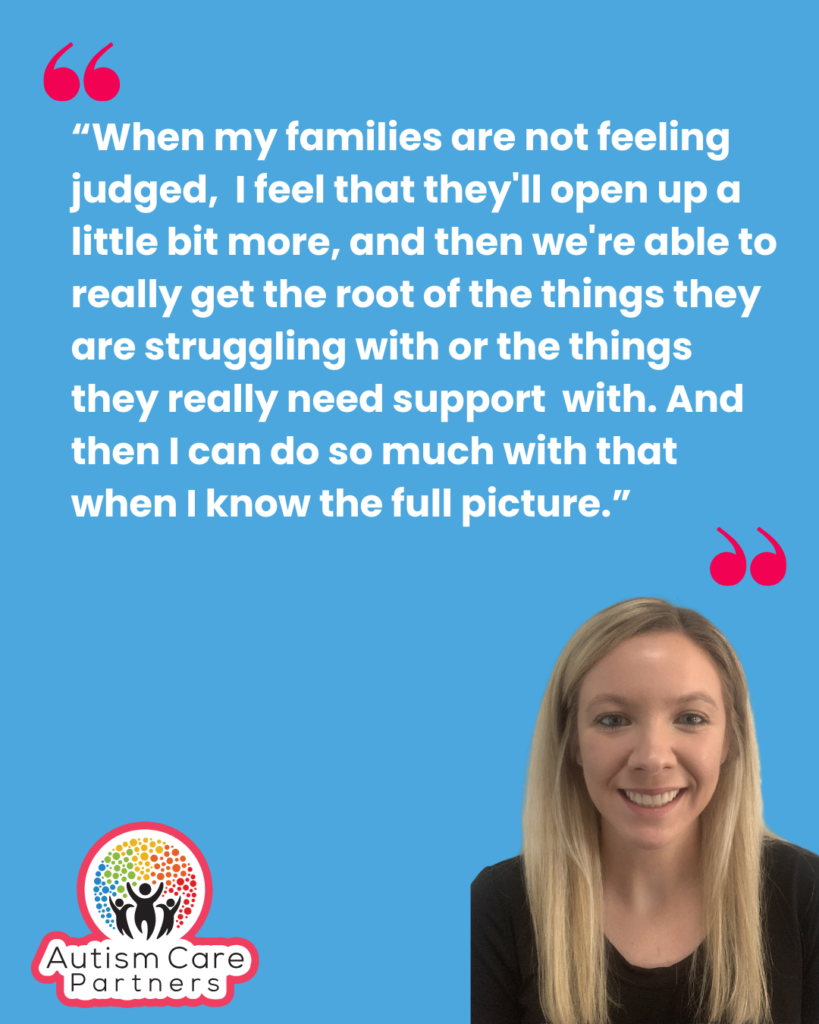
Oftentimes, using skills in a variety of ways is referred to as “generalization,” a term that is used within ABA to describe when “you’re able to take a skill and put it into different situations. So, whether that be with different providers, with different people, in a different setting entirely, it could also be that you’re generalizing it to a different way it’s presented.” Accomplishing this is simply not possible without strong relationships between our clinicians and families, but this is not always as easy as it sounds. There is a stigma around mental health care that we have to overcome, and one of the ways Liz and ACP do this is by making sure to approach every situation with care and without judgment. She finds that “when my families are not feeling judged, I feel that they’ll open up a little bit more and then we’re able to really get the root of the things they are struggling with or the things they really need support with. And then I can do so much with that when I know the full picture.”
ACP’s collaboration does not stop there as we always ensure collaborating with our teammates to provide the most encompassing care possible! Sometimes this may be challenging given everyone’s expertise, but Liz believes it comes down to giving others the respect they deserve. When you create an environment where people feel comfortable pushing back or bringing their own ideas to the table, you end up creating treatment plans that truly benefit our learners! Liz states that “Our respectful professional relationships really do work wonders. And then as a result, we’re a fun crew to work with. When we’re able to respectfully work together and really collaborate, it does give a really good environment for everyone.” Not only this, but she recognizes that as a Board-Certified Behavior Analyst (BCBA), she doesn’t spend as much time with the kiddos as the BTs (Behavior Technicians) or even our Speech Therapists or Occupational Therapists because she has the whole center to supervise. Coming to terms with this “was definitely something I learned very early on in my BCBA career, that I may have the knowledge and the different background to support and give all those fancy terms, but my staff are the ones that are with them day-to-day.” Because of the open communication Liz has with her BTs, they can work together to create activities that target exactly what is needed and will have the greatest impact.
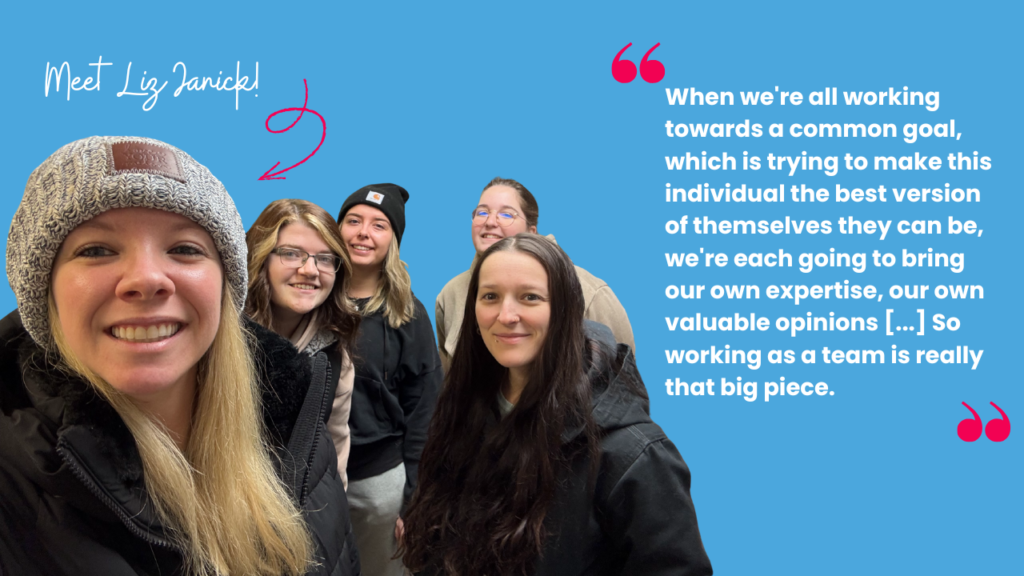
Furthermore, being receptive to feedback from other clinicians with different experiences is extremely important. At the end of the day, the most important thing is empowering our families to reach their fullest potential, so as Liz stated, “The egos get put out of the way.” Creating a team that is focused on the progress of our little ones rather than personal gains is vital in supporting families the way we do at Autism Care Partners. Whether it’s parents and caregivers or other clinicians, everyone has something important to bring to the table. This is because, “when we’re all working towards a common goal, which is trying to make this individual the best version of themselves they can be, we’re each going to bring our own expertise, our own valuable opinions […] So working as a team is really that big piece.”
The new year is a great time to reflect on personal goals but also re-evaluate current goals. Liz mentioned that this time of year is a great reminder to check in with families. Even just a few minutes to ask if current goals are still working, if new ones have come up, or if things need to be adjusted can not only improve our treatment but also continue building that strong relationship. Making sure to be open and honest with both other clinicians and families can make a life-changing difference in the progress that our learners make. By keeping an open line of communication with caregivers, not only do you build trust, but you also build an understanding. Liz describes, “I’m not going to try to feed them some false hope or anything. I’m going to give them a realistic timeline or realistic strategies. I’m going to give them the research, the evidence-based information to support what we might be working on. I’m going to have those very honest conversations with them.” This is because “that way they trust that if I’m saying, ‘let’s try this’ or I’m making a recommendation, that it’s coming from a place of me really trying to understand where they’re at and really support that, too.” At the end of the day, collaboration is an irreplaceable piece of delivering care that is individualized and designed to empower learners. This is why collaboration is a core value of ACP, because “if we’re not going to work as a team, then we’re all kind of working against it [the team],” and we are nothing if not a team here at Autism Care Partners.
Written by Eden Osiason


