
It’s officially the season of love, and at ACP we prioritize self-confidence and self-love within our clinical work daily. Through positive reinforcement, our clinicians ensure they honor the identity of our kiddos while empowering them to reach their fullest potential and encouraging them to uncover all they are capable of! To learn more about how integral positive reinforcement is to ACP’s methodology, we spoke with Kate Marsh, ACP’s Clinical Director of Team Framingham who shared how client-centered care and reinforcement contribute to self-love and success later on in life.

What is positive reinforcement, and how is it used in ABA?
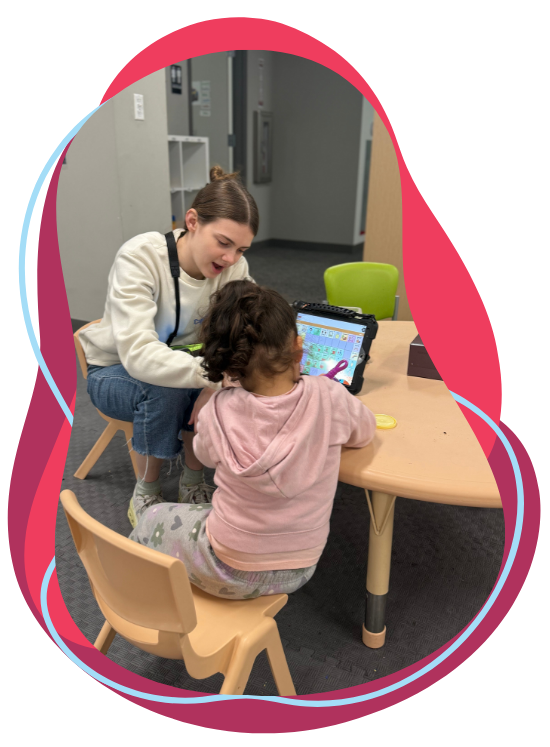
“Positive reinforcement” is a term often used within Applied Behavior Analysis (ABA), but in reality, it is not strictly a clinical concept. Put simply by Kate, “positive reinforcement, generally, is the concept that involves rewarding a behavior to increase the likelihood that it’s going to happen again later in the same context.” For example, this could be praising a child for completing their schoolwork, which then leads to natural reinforcement of their grades increasing. While positive reinforcement is not specific to ABA, “the only difference is that we are utilizing it to help our clients improve their quality of life.”
What exactly does that mean? Our clinicians may begin with tangible reinforcers, such as toys paired with social reinforcers like praise, to begin motivating our kiddos. However, according to Kate, “we often talk about decreasing tangible or arbitrary reinforcement over time and then transitioning the reinforcement to more social reinforcers” because this is what they will receive outside of our centers when they move on to their next adventures, such as school. By doing this, we prepare our learners for more challenging tasks throughout their lives and reward the effort they put in to overcoming those obstacles. As Kate says, “When you give people the recognition that they deserve for the hard work, then things get better for everyone.”
How does positive reinforcement contribute to self-confidence?
At ACP, we make it a priority to maintain and boost the confidence of every little one who walks through our doors. In the outside world, individuals diagnosed with Autism may be confronted with stigma or false stereotypes, so within our walls, we aim to equip our clients with the understanding and self-love to know they can accomplish just as much as everyone else. One of the ways we do this is through utilizing positive reinforcement, not just for large victories. Kate says it perfectly, “We want to reinforce effort, not results. While we do really love it when we see that tangible progress happening with our kids, what we really, really care about is they’re trying, and they’re trying really hard.” By rewarding the effort our learners put in, they begin to feel the confidence that we have in them to gain these new skills!
As our kiddos continue their care with us, we also continue aiding in their self-confidence by talking up their strengths and rewarding them with praise. Kate says, “The more we challenge them and they are able to meet those challenges, then they can feel more capable and more proud. […] We’re going to praise them for just being them. We’re going to praise them and celebrate them for what makes them unique and share in their joy of what makes them unique and get excited about whatever they’re excited about and help to see themselves in a positive light.” The more our learners see themselves exceeding expectations and being celebrated for it, the more faith they have in themselves. This is how positive reinforcement truly snowballs into a life-changing tool for building confidence.
How do we honor the Autism identity at ACP?
To continue increasing the self-love of our kiddos at ACP, we always aim to shed a positive light on their Autism diagnosis rather than treat it as something to hide or be ashamed of. “We recognize that Autism itself is an integral part of who somebody is, that it’s not something separate. It’s not this addition that if we just took it away, they would be different in a good way, or even different in a bad way, it’s just them,” says Kate. Kate also cited a study conducted by The National Center for Biotechnology Information that found that adults with Autism have a better psychological well-being when they have a stronger identification with the diagnosis. This is why we strive for our kiddos to be proud of who they are as a whole, so when they leave our centers, they have this positive association with their identity.
Furthermore, the language we use is a vital contribution to confidence. While learners with ASD sometimes present as a different age developmentally, we always want to maintain their dignity and treat everyone with respect. Our clinicians ensure they use language that empowers our learners as people. For example, “using baby talk with someone who is eight years old, that is not supporting their dignity. And we really want to make sure that we are keeping in mind as clinicians to really weigh out chronological age as well as developmental cognitive age and make sure that we are holding both in our minds to respect this person as an individual.” However, the impact of language does not stop there!
Kate holds the wish we all do, “that it was a world outside of these walls, that it was okay to just be. And I think that’s one of our big aims in what we do at ACP is to allow people to just be themselves.” Through prioritizing the self-love our kiddos have, we hope they go on to their next adventures with the confidence to just be.
Thank you, Kate!
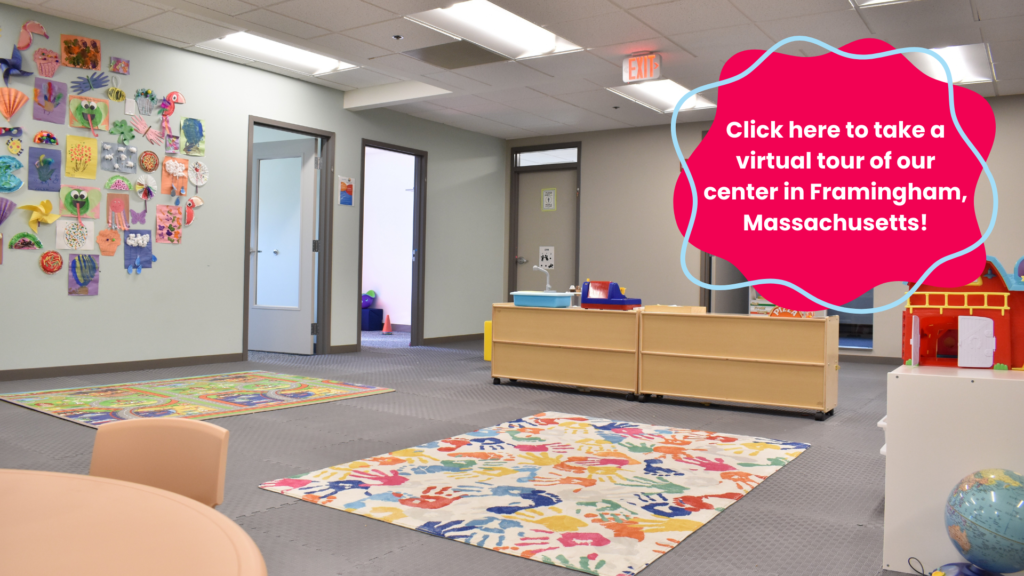
After opening in 2023, our Framingham center has grown and exceeded expectations. With Kate Marsh as the Clinical Director, we cannot wait to see all the things Team Framingham will continue to accomplish! Kate has made this location one of acceptance, spreading welcoming and positive energy with every action she takes. When she first took over as the Clinical Director, Kate describes how she actively sought out feedback from her team and how that created a trusting relationship between them. Kate describes, “I think generally seeking out feedback as a superior is an under-utilized tool, and I find it very reinforcing for myself. […] I think my staff find it reinforcing to come and complain to me, families find it reinforcing to come and complain to me. But what’s cool is the more I’ve asked, the less complains there have been and more suggestions.” This demonstrates the culture we strive for at ACP, where collaboration is at the forefront of care.
As Valentine’s Day approaches, remember that self-love is just as important as the love we spread to others! Being confident in yourself can lead to higher self-esteem, better well-being, and more. In a world where those with ASD may be confronted with negativity, it is vital for the little ones in our care to leave knowing they are incredible, resilient, and capable individuals. By creating a positive relationship between our learners and their identity as well as using reinforcement to boost self-confidence, ACP can provide them with tools needed to be as successful as possible later in life, which is our main goal after all!
Written by Eden Osiason


