
When we think of the term “success,” there is no singular meaning. For some, success includes obtaining a degree, while for others it can be spending time with loved ones or even simply being able to live your truth. At ACP, we often say we strive for our learners to be as successful as possible, and by defining success through the eyes of our little ones, we can provide them with all the tools they need as they continue their journey.
Before we can get to success, we must first identify exactly what the goals are. Because everyone’s objectives and ambitions are different, so are the victories we see along the way! We prioritize making sure all our learners are working toward the goals that are best suited for them individually. This means working collaboratively with caregivers to identify which areas for growth are most meaningful.
When we spoke with Liz Janick, our Clinical Director on Team Taunton, about how we set goals at ACP, she added that “We’ll collaborate on the goals and what’s working [at home], what’s not, brainstorm even how to maybe change some things up. So that way it’s really beneficial everywhere, and that we’re seeing that progress we’d like to see.” Success is reaching the goals you have set, and that is much easier when you are working towards something that motivates and is beneficial for you!
In the broad sense, societal stigmas and expectations can make certain images of “success” feel unachievable at times. When first receiving a diagnosis of ASD, many caregivers understandably question what the future holds. But we at ACP are here to assure you that the future is still bright alongside Autism. In fact, individuals with Autism who enter college have a 74% graduation rate (WorldMetrics). This is only just over a 10% difference compared to neurotypical individuals, a closer gap than previous years, demonstrating increasing support for people with Autism leads to more equal opportunities.
If your child would like to pursue employment, there are countless organizations that specifically employ individuals with developmental disabilities, who often excel at many functions in a working environment, such as organizational tasks with repetition or highly logical, highly focused tasks. For example, ACP had the pleasure of visiting Rising Above Bakery (RAB) in Nyack, NY, an organization that aims to support and build community for those with developmental disabilities. There are a myriad of ways a person with Autism could see success, such as the RAB bakery, computer programming, library science, and more.
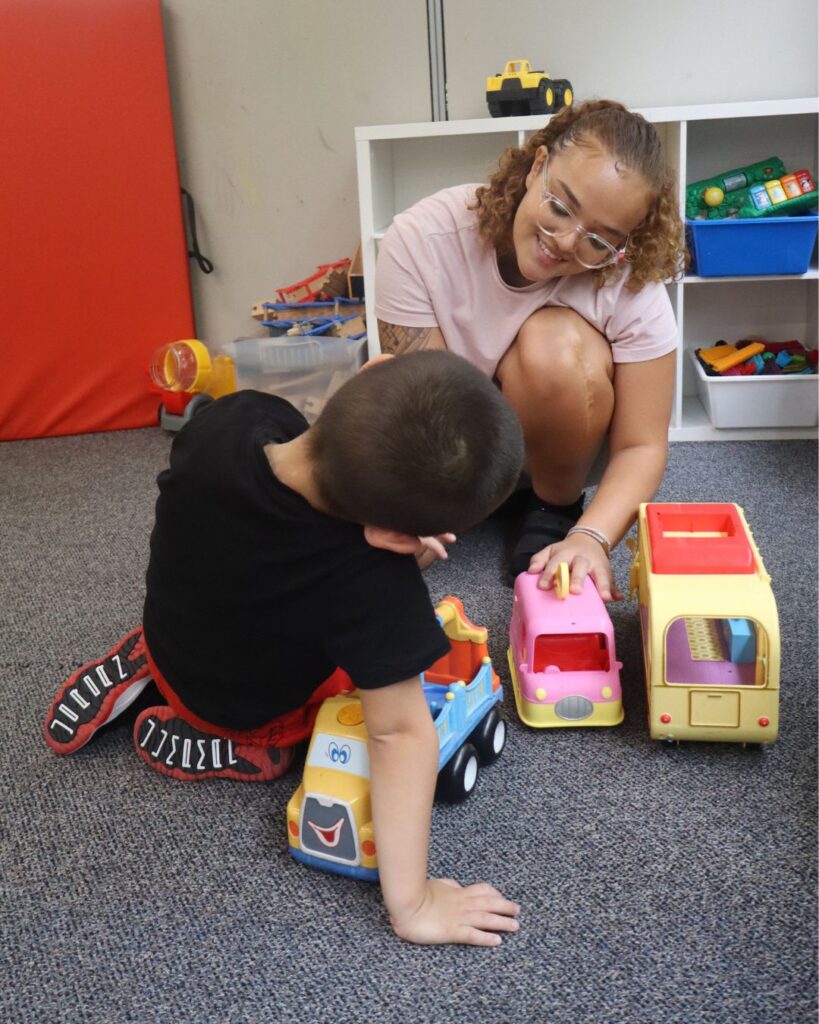
At ACP, we tailor our services to ensure every child is capable of achieving success in skills that make most sense to them as an individual. For example, learning to stretch a hair tie and put it over your foot and up to your ankle increases dexterity and strength that later can lead to putting on socks and later shoes independently. Stretching that hair tie and getting it to your ankle may seem like a silly celebration to the neurotypical community, but for some learners, it makes all the difference. “Little” victories are never as small as you may think. Every play-based activity we do at ACP has a direct, medically necessary goal in mind like potty training, communication, improved coordination (and thus improved safety), and more.
Additionally, celebrating every win helps boost the self-esteem of our learners, which is a type of success in itself. Having a strong and positive relationship between yourself and your identity is a challenge anyone can face, even without a diagnosis. But, our learners continuously show up to learn and build new skills—and their caregivers continuously show up to carry over those skills and strategies into the home environment. And each win helps ensure the child and their caregiver know that anything is possible.
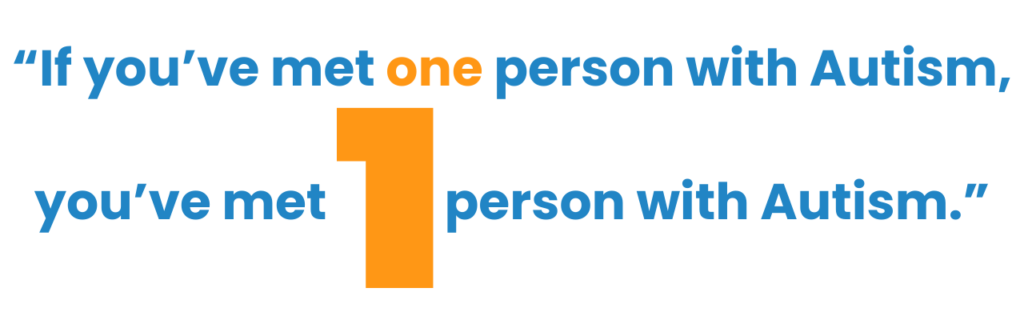
At the end of the day, there is no “one size fits all” definition of success, because there is no “one size” for people! Every person, no matter if they are neurotypical or neurodiverse, is different, and therefore, what success is to them will be different, as well. At ACP, we stand by the mantra of our Director of Psychology, Dr. Rebeccah Costa: “If you’ve met one person with Autism, you’ve met one person with Autism.” Every child who comes through our doors is different in their interests, strengths, motivations, and goals, even if they have a common diagnosis. Every treatment plan must be unique for every little one, as they are unique themselves.
A neurotypical aerospace engineer likely has a completely different set of skills and has reached completely different goals/markers of success throughout their life than a neurotypical world-renowned ceramic potter or a neurotypical stay-at-home mother of four. As such, comparing the goals and success of each individual child will only cause undue stress on you, the caregiver, and your child, the learner. What looks like overcoming water aversion today could lead to potty training or independent bathing later. Which is why we cheer each time a little learner with this particular goal puts their hands under the running sink water. What looks like snacking on chips could lead to accepting a non-preferred food touching the preferred food, which might later mean trying the non-preferred food. So, we celebrate. Every little win. Every day. For every little learner.
If your child receives an Autism diagnosis, ACP is here to support you, to help guide you through what happens now. Just because your child has this diagnosis doesn’t mean they can’t see success. It’ll just be different for them, as it’d be for any individual. Come celebrate the wins, big and small with us or talk to us today about how these small goals can lead to life-changing independence later.
Email ACP at Welcome@AutismCarePartners.com or call 800-679-3609 today to get started.
Written by Eden Osiason


