

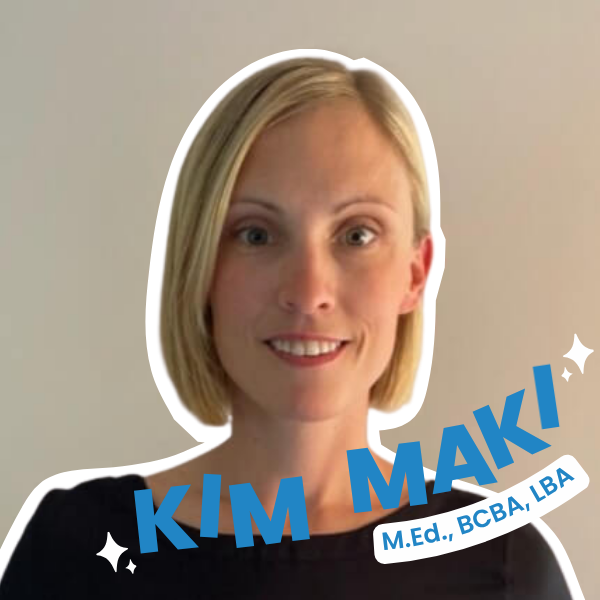
Kim Maki, Senior Clinical Director, serves our South Burlington, VT center. She’s also a wife, mother, and avid adventurer. Originally pursuing a career in Speech-Language Pathology, Kim brings a very unique perspective to her role within our Applied Behavior Analysis (ABA) team.
Today, Kim details what brought her to ABA, how she approaches therapy at her center, and shares a story of how ABA just works.
Review our conversation with Kim below and consider connecting with Kim and her team today!
Tell us about yourself.
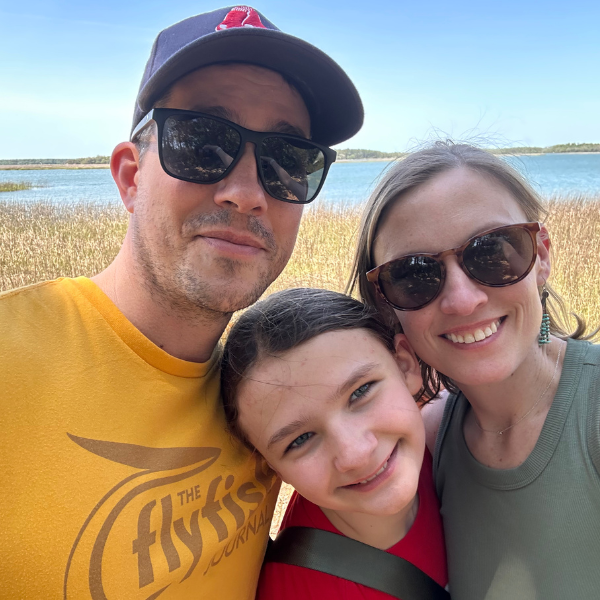
My name is Kim Maki and I am the Senior Clinical Director at our site in South Burlington. Outside of work, I am a mom to a vibrant, funny 11-year old daughter. She keeps me busy with the numerous sports and activities that she is involved in. I love spending time with my family, reading, and engaging in physical activity. I especially love outdoor activities like running, biking, hiking, and camping. I also have a little 10-month old puppy, Ozzie, who is a handful, but who is so cute and loveable that it’s easy to forgive his antics.
Have you always been interested in this kind of profession?
I always knew that I wanted to work with kids or with people in some capacity. But I always also sort of knew I never wanted to be a traditional classroom teacher. I just really, really love working with kids, and so I always knew in my heart I would end up working with kids in some capacity. My undergrad degree was in Family Studies. So again, focusing on people and Human Services.
My dad tried to push me towards business and a business career, and I will never forget … I took one course in financial accounting because he was like, “You really should try business,” and I got a D and I’m like, “I’m an A student. I don’t do poorly in school. Is this enough to prove to you that this is not where my passion lies?”
So you always knew you wanted to work with kids. How did you then narrow down your career path?
I met someone who worked for the Center for Hearing, Speech and Language and I ended up getting a job there. I was helping head up an early literacy program that was geared toward at-risk children. We would go into low-income housing developments, and we would run a literacy program. We did this all throughout Denver.
I really loved this job because I got to work with kids who were considered “at-risk”, which always also been a passion of mine. Working at this center I got to meet Audiologists and Speech Pathologists, I started to delve into the Speech and Language world a little bit more. After that I was like, “Okay, I’m gonna go back to school. I’m gonna get my leveling certificate.” I already had a bachelor’s degree in Family Studies, so I just needed what’s considered a ‘leveling certificate’ to meet the requirements for grad school. I loved the program and the contacts I made there.
Then fast forward a bit. We moved back to New Hampshire, because we knew we wanted to start a family, and it is helpful having grandparents nearby. I got a job at a specialized school. It’s an out of district placement for children with Autism. I was working there in the capacity of a Speech-Language Assistant and unbeknownst to me, it was an ABA school. I was like, “What’s ABA?” That was really where I got my introduction into Applied Behavior Analysis.
It kind of blew my mind that this was the first I was really hearing about ABA, but I loved it.
ABA just was it. I loved what I was doing there. I found myself really, really intrigued with the behavior management piece. We had a lot of kiddos there who engaged in some pretty severe behaviors. Through watching the Behavior Analysts there do their thing managing behaviors, and by reading through the behavior plans and looking at the data, I started to get more and more and more intrigued. I had sort of an “Ah Ha” moment.
I was like, this is it. I love this population, love what I’m currently doing, but I need to be doing ABA.
That is when I made the decision to go to grad school. It was a tough time because I had a one-year-old daughter, and I was working full-time, and I was taking classes at night to pursue this dream. So don’t ask me about those two years, because I think I just blacked out … I mean, I did absorb information! [Laughs] I put my nose down, and I was like, “I just have to do it.” So that’s how I ended up where I am.
How does your background influence your treatment plans?
I’ve been doing this a long time, and I do have a pretty good understanding of developmental progression and sequencing that I think really helps me when I do write a treatment plans. I know where they need to go next. I know what we need to do to prevent splinter skills. I think also having the background working with kiddoes who engaged in a lot of potentially unsafe interfering behaviors, and having a background in speech, has helped me to become more well-rounded.
Can you tell us a story about how you’ve seen our services significantly impact the quality of a child’s life?
We had one client, when he came to us, he had no functional communication. No real means of communicating. In the first two to three weeks that he was with us, he was engaging in tantrum behavior pretty much all day, every day. It was really, really hard and pretty severe, too. He engaged in a lot of head banging. If you interacted with him at all, whether it be asking him a question or even just saying hi, he would start to tantrum again and engage in more head banging behavior. It was really, really, tough.
But, we worked through it. We wrote the behavior protocols, stuck to the protocols, introduced PECS to him as an initial means of communicating his wants and needs. He picked right up on that. Fast forward less than three years, he graduated and was fully vocal verbal.
When he transitioned out of the program, he was speaking in full sentences. He was reading books. His interfering behaviors were basically down to nothing. It was truly, truly incredible. Just such a testament to him and all the hard work he put in.
Also a testament to his family, who was amazing. And last but not least, a testament to the BTs who worked with him day in and day out.
He’s one of those success stories where I am like, “ABA really works.” His family was thrilled about all the progress that he made. For naysayers out there, people who are misinformed about ABA, I want to say “look at where this kid came from and where he is now- and he is just one of many many success stories- he truly has a better quality of life now, and that is due in large part to the science of ABA.”
Did you set any goals for the new year?
Professionally, we were asked to think of a word that we want to focus on for the year, and my word is seek. I think it’s easy in a job to become like a little stagnant or a little comfortable. And I don’t want to do that, especially in this in this job and in this field. So, my goal for this year is to seek new ways of doing things and new information and new research so that I can stay fresh and good in my practice.
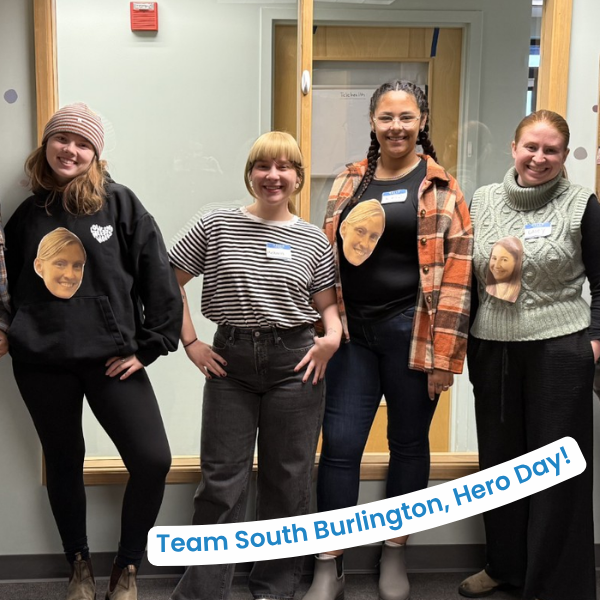
As the Senior Clinical Director of Team South Burlington, Kim oversees all of the Applied Behavior Analysis service delivery at her location. She’s a strong, passionate leader of a phenomenal group of clinicians. When working with Team South Burlington, you’ll meet Charles Hunt, our Family Liaison who will help guide you through the intake process and scheduling your first day of service. Kim’s incredible Board Certified Behavior Analysts will work with your child to assess their strengths and areas for growth. From there and with Kim’s oversight, they will collaboratively create a treatment plan with you to address your child’s goals and how those goals will be accomplished.
What’s more? South Burlington also offers Diagnostic services with Dr. Melyssa Sweet if you are seeking a psychological evaluation for Autism and Speech Therapy with our new teammate, Jeremy Bushey!
If you want to connect with Kim, Dr. Sweet, or Jeremy to review ACP’s services, initiate your ACP journey at AutismCarePartners.com/Contact today!


